Showing posts with label urban cycling. Show all posts

Sunday, June 13, 2010

Law'n'Order: Ethical Principles and Practicality

Questions to consider:
  • While motoring*, have you ever tried to scrupulously observe the speed limit, anywhere in the US, any time in, say, the past 8 years? What happened? (Bonus question: Was there bloodshed?)
  • When's the last time you saw a motorist make a complete stop at a stop sign when it wasn't mandated by cross traffic?
  • If you live in an area where cellphone use is illegal while driving, do you see people doing it anyway?
  • Are there stretches along your cycle commute where litter is really bad? (Bonus question: How many times in the past, say, month have you noticed complete fast food bags discarded?)
By now you're asking, "What's your point, Robert?" Fair enough. I've been thinking about how personal ethics are affected by being in a car. I'm wondering if the isolation that an automobile imposes, the sense of being "cut off", somehow enables the motorist to compromise his principles. Is a cyclist different because he's "out there" in the environment with little or no protection? Admittedly, I see plenty of cyclists (in the US at least) do lots of scofflaw behavior. And it's this behavior that I always consider "stupid", meaning dangerous, or ultimately impractical.

Ethics seems to be about finding the balance between the principle and the practicality of the situation. Consider the well-known "four-way test" of the Rotary Club International:
  1. Is it the TRUTH?
  2. Is it FAIR to all concerned?
  3. Will it build GOODWILL & BETTER FRIENDSHIP?
  4. Will it be BENEFICIAL to all concerned?
Notice that items 1 and 2 are about adherence to principle (truth and fairness) and 3 and 4 are about practicality (goodwill, friendship, benefits). Certainly, if an action can be said to meet all 4 questions in the affirmative, it can be said to be ethical. (See this post for more ruminations on the Rotary "4WT", including examples of situations where the principled and the practical collide.)

Traffic laws (and for that matter, littering laws) are thankfully areas where the principled and the practical coincide, or at least overlap greatly. A commenter on a previous post noted that cyclists (and pedestrians) in Denmark were scrupulously observant of traffic laws, and I've noted the same on my travels to Europe, in Germany, Switzerland, Belgium, and Sweden. (France is, well, another story.)

I'm always flummoxed when I see a bicyclist, say, commenting on a blog, defending his right to break the traffic laws. Neither principled nor practical.

*I recognize this blog is not about motoring, and it may be that many readers of this blog in fact never act as motorists. To you, I doff my helmet and bow.

Saturday, May 22, 2010

BTW Day, Again

So I went to the Columbia, MD, Bike-t0-Work day yesterday. As I've said before, my feelings at these affairs are mixed at best. This year was about the same as last year, although there were more practical bikes (if not cyclists!) in attendance. I found the speakers more fatuous and self-congratulatory than I remember: at least two county officials sent their aides in their stead, who dutifully reported that "[blank] couldn't be here today because of a scheduling conflict," to which I was thinking, "Yeah, at 7:30 am, it's a conflict with bed." Mostly, there was a air of patronization, of "we say we love you for what you do, but we wouldn't be caught dead doing it ourselves."

Hm. I'm betraying a seriously bad attitude here.

(Truthfully, I did seriously appreciate the Chief of Police who is a fit looking guy and a cyclist, who got up, gave an update on Maryland traffic laws -- hey, we have a Three-foot rule now! -- and admonished the crowd that you have to be respectful of traffic laws if you want respect from motorists. Hear, here.)

The county director of transportation got up and, after talking about mostly nothing for about a minute, and never mentioning any traffic improvements for cyclists, prompted me to shout, "more bike lanes!" which (to my satisfaction) nonplussed him and gained me the bemused looks of fellow cyclists. (I was hoping for a smattering of applause.)

The problem is (as it was last year) is that no one is serious about promoting biking to work. If they were serious, they'd be showing off bike lane planning for the region (assuming same existed,) they'd be touting LCI's teaching "Road 101" classes, there would be little workshops on "what you do (and don't) need to be carrying on a commuter bike." But there's none of that. There are a couple of booths for local bike shops showing off various relevant and non-relevant bikes, there are people talking all starry eyed about how they got county officials to listen to a presentation about sharrows (but no commitments of any kind), and there are county officials waxing ecstatic about how BTWD got them to practice riding so they could show up, and guess what? It was exhilarating! Plus lots of bumper stickers and tee shirts. (Where was the League of American Bicyclists?)

Look, being serious about wanting people to bike to work equals a commitment to painting bike lanes. It really is as simple as that. The few of us who are vehicular cyclists will bike to work anyway (and be perfectly safe,) but the others need bike lanes. New York City has proved this. Studies conducted over the last couple of months show a significant increase in cyclists in New York City following their painting over 200 miles of bike paths (although there is some controversy on the exact numbers). If the powers-that-be really want to encourage practical cycling for all the reasons they say, all they need to do is get out the white traffic paint.

I shouldn't be so negative about BTWD. I was in the middle of a conversation with a county official when a fellow cyclist (fully outfitted in cycling gear) came up and said, "Hey, you're the guy that I see biking to work every day, aren't you?" It made my day.

Monday, December 14, 2009

Jan Gehl, Planner Extraordinaire

A name that I became familiar with only after reading David Byrne's Bicycle Diaries over the Thanksgiving holiday (a complete review is on its way) was that of Jan Gehl, a Danish urban planner who is largely responsible (as far as I can fathom) for making Copenhagen the world bicycling paragon that it is. I have spoken before about Copenhagen and its self-propagated images and perceptions, and frankly, I've been less than complimentary, because I think that the most vocal Danish bicycle proponents confuse cause and effect and fail to give credit where it's due (Mikael Colville-Andersen, in his talk in Washington DC, did not mention Gehl).

But if he is not personally so, Gehl appears to be close to the source itself. He's an architect and planner, and principal in Gehl Architects (who have one of the coolest Flash web front-ends I've ever seen.)

New York has a significant connection to Gehl as well. The New York City Department of Transportation hired Gehl as a consultant to survey its streets in 2007 and, by no coincidence bicycling is up in that city as well. Perhaps related to this connection, the New York Times has seen fit to recognize Gehl in its ninth annual Year in Ideas issue of the Sunday magazine.

Byrne talks about Gehl in several places in his book. He introduces him talking about Melbourne and the success they've had in making their city much more liveable. Byrne describes Gehl as
a visionary yet practical urban planner who has successfully tranformed Copenhagen into a pedestrian- and bike-friendly city.. We here in New York think that's .. all well and good for the Danes, but New Yorkers are .. independent minded, so that can't happen here. But Gehl reveals that his proposals initially met with exactly that kind of opposition over there: the locals said, "We Danes will never agree to this—Danish people won't ride bikes." [emphasis mine]
There are many reasons to be hopeful and engaged after reading Byrne's book, but I must say that I found the above paragraphs to be the most inspirational I'd read in quite a while.

Friday, December 11, 2009

Plan B for Cold Weather

..and when I say, "Plan B", I'm not talking about not riding! Today it's about 20 degrees (F.) out, but clear. A good day for cycling, if you dress right. However, flatting a tire in really cold weather can be a royal pain. In order to fix that tire, you have to pull of those nice warm gloves, and I can guarantee that adhesives just don't work the same in extremely cold weather. (Hm, this seems to be a self-referential kind of post.)

If you flat, it won't be a problem to fix it once you get to your destination; you'll have your patch kit, tools, and access to soap and water for a clean up. But on a cold, blustery day, it sucks to do this outside. I think the best solution is to have a Plan B. The only two Plan Bs that I can come to reasonably are:
  • Calling a (good) friend on your cell; and
  • Public Transit
The first one being self-explanatory (let's hope your friend doesn't drive a Mini), let's concentrate on the second. It's not necessary for a cycle-commuter to cycle along bus routes in cold weather, but it's good to know where they are relative to your ride. (The graphic is an overlay done in Vectorworks of a GoogleMap screencapture of my route over the PDF of the Howard County transit routes. The HCT routes are abstracted enough that this exercise is of but limited value, but you get the idea.)

So in very cold weather, try not to flat. But if you do, have that Plan B in the back of your head. Know where the transit routes are relative to your route, and head to a bus-stop if you flat. (Have the correct change for that fare ready!)

Thursday, November 19, 2009

Objet Trouvé

Seen in Houston.

I swear to God that I didn't touch the thing; it was just right where I found it.

I have to admit, it's a little hard to imagine the circumstance that would allow a cyclist to just leave his left crank-arm and pedal sitting out there near the curb like this. I mean, clearly there was a missing crankarm-fixing-bolt, and I suppose that it's possible to lose one of those, (although I've never done it personally,) but how does this happen and you don't just reach down and retrieve the thing?

What's the most likely? Was it:
  1. the cyclist was walking his bike and didn't notice;
  2. the cyclist was walking his bike and too drunk to notice;
  3. the cyclist had his bike on the back of his car;
  4. the cyclist was riding and he and every bit of his bike except the left crankarm and pedal was hit big-time by an alien abduction ray;
When you figure it out, let me know.

Tuesday, November 10, 2009

Blighters Rock

No, it's not really writer's block, I've just been, ah, busy. We're in busy season at Nemetschek, meeting our design deadlines for the next great version of Vectorworks, and I've had my head down.

I've had my head down cycling, also. As I knew would happen, I "made my year" and met my goal of 3300 miles last week. In retrospect, it seems kind of ho-hum. We'll see how many miles I make by the end of the year and I'll try and do some kind of estimation of what percentage of work days I rode to work. I have to say, though, my utilization has got to be really high, if you deduct for business trips. I think I use my car to get to work no more than 2 days per month, at least for the past 3 or 4 months. Good weather (that is to say, reasonably clear weather) helps.

When it comes to understanding urban cycling, there's nothing like statistics. The city of Fort Collins, CO has just released a compilation of statistics about cycle-auto accidents over a 30 month period and I'm working on some analysis of that as well as accident stats from elsewhere. But the news item I've read recently that has I think the most significance is new bicycle usage stats from New York City. Since 2007, the ridership is up 66%. (That is to say, cycling levels in 2009 are 166% of what they were in 2007.) Wow. Check out that chart. (That is a zero-based chart!)

What can account for this? It's pretty simple, really. There's a serious commitment by the NYC DOT to get people bicycling. The city has substantive programs in:
  • Bicycle education and safety;
  • Bicycle parking;
  • Bicycle/Mass Transit interface; and
  • Bike street infrastructure.
The city has created 200 miles of bike lanes in 3 years and is committed to 50 miles of lanes per year until it completes its bike network. Check out the main NYC-DOT page on cycling and drool. For anyone outside of NYC, it is just enviable, to live in a city that has resources and uses them to Make Things Better.

Wednesday, October 21, 2009

Two Interesting Articles in surprising places...

Article 1: Slate, which I haven't read since the end of the election season. (I don't miss my addiction to political online writing much!) Anyway, they published a quite good article by Christopher Beam about vehicularists vs. infrastructurists. Here's a quote:
Vehicularists see the potential transformation of America into a Euro-style bike paradise not just as a far-fetched utopia but as an insult. Dedicated bike paths are an admission that the cyclist deserves pity and should be walled off from the world. Bike paths are separate but unequal—a way for motorists to get bikers out of their way. John Forester, the author and engineer known as the intellectual forebear of vehicular cycling, traces the philosophy back to a set of laws introduced in 1944 that relegated bikes to the far right of the road, prohibited cycling outside of bike lanes, and banned them from the street if bike paths were available. (These laws were part of the Uniform Vehicle Code, a national model on which states base their own traffic laws.) Since the rise of the automobile, vehicularists have seen any attempt to treat bikes differently as a civil rights violation.
Go check it out.

On a related (sort of) topic, I've been thinking about the typical legalese in the Uniform Vehicle Code adopted by most states that talks about "[bicyclists] may ride two abreast if not impeding traffic." Certainly our intuition tells us that bicycles "impede" auto traffic, but I think the truth is a little less obvious. If we think about "impeding" traffic as being the same as "congestion" (reasonable enough, I submit), then at least in theory, widespread bicycle use should produce less congestion (by using up less roadway) and therefore bicycles, while microcosmically acting as an impediment, macrocosmically reduce congestion!

Which is a sort of round-about lead-in to article 2, in the Wall Street Journal, which makes the dubious claim that traffic jams, by providing disincentives for driving, are "good" for the environment. (It's of course a rather transparent plea to avoid congestion taxes, but hey..)

Tuesday, October 6, 2009

Juking the Cars

I was going to call this post "Vehicular Jiu-Jitsu", but technically Jiu-Jitsu implies using the weight (and momentum) of your opponent against him, and in terms of weight and momentum, the cars have all the advantage. So I realized I was really thinking about another "J" word, from American sports (it's used both in American football and basketball): Juking.

The online slang dictionary defines the word thus:

juke |joōk| informal

verb [ intrans. ]
1 to cheat.
2 to not meet someone as planned; to "stand up."
3 to fake out or to feign [sports].
4 to dance provocatively.

The applicable definition here is #3. In basketball, to "juke the defender" means to fake a shot (to get the defender to leave his feet) and, while the defender is in the air, drive by him. In football, the "juke" is a weaving or swerving pattern used by receivers to lose their defenders. In both cases, the offensive person make a move to get the defender to hesitate, and then takes advantage.

It happened in traffic the other evening, coming home. I was trying to move into the left lane in traffic to get into a left-turn-only lane. I had my arm out, and two cars had passed me by (the second one made me a little angry -- he had plenty of time to see me and give me room.) The guy in the third car was going to try and sneak by (I was "just a cyclist", after all) but I crowded him, swerved ever so slightly into his lane and he backed off. He didn't want to -- he gave me quite the dirty look as he passed me by on the right. When I saw what he was driving, (a Mercedes S-class) I gave myself a couple of bonus points, as I suspect he wasn't used to getting backed down by drivers in lesser cars, much less a cyclist.

Welcome to the juke, fella. Don't be angry with me just because I maneuvered you into doing the right thing.

This ability to make a split-second judgement about what a driver is doing (or likely to do) is one of, if not the most challenging aspect of vehicular cycling.

Particularly in this situation -- drivers wouldn't dream of overtaking a car slowing down with its left turn-signal on, but many, many drivers think they can sneak by a cyclist doing exactly the same thing. Although it helps to be taking the lane pretty aggressively, I've still had drivers zoom by me when I'm full in the lane with my arm out. I can't explain this level of motorist negligence.

I don't know how this is taught in the LAB classes (as I've not been able to attend one yet, but that's another story). I think it is one of the most "athletic" aspects of VC, so the athletic analogy is well-suited here.

NB: The image above is from a very cool web page illustrating "Self-Defence with a Walking-Stick," originally from a 1901 edition of Pearson's magazine.

Sunday, October 4, 2009

Fashionista

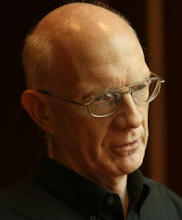
Mikael Colville-Andersen (that's him at right) is a film-maker and the blog author over at Copenhagenize and Copenhagen Cycle Chic. I heard him speak at the Washington DC Planning Commission last Wednesday night. Mikael is a good public speaker and a charming and funny guy, and he is promoting a provocative idea about urban cycling and cycling policy:

We could have all the benefits of Copenhagen cycling if we just, you know, dressed a little nicer on our bikes, if we just marketed bicycling as an activity by, um, looking more like a fashion plate.

Mikael cites a lot of statistics (if, for example, you go over to Copenhagenize, you can see a running total of bicycle miles ridden in Copenhagen up to the moment) and makes a number of frankly good points about the Copenhagen environment. He talks about all the bike infrastructure that's being implemented in Denmark, and he spends no small amount of time addressing the fact that cycling is so much a part of the Danish lifestyle that people who do urban cycling in Copenhagen don't think of themselves as "cyclists". To what does Mikael attribute this great example for the rest of the world? To the fact that the Danish cyclists dress well, with a sense of style, (and that the men wear suits). Mikael asserts that bicycling's lack of status (outside of Copenhagen and -maybe- Amsterdam) is due to the fact that we just don't dress well enough.

Mikael, excuse me for saying so, but I think you have your cause and effect either reversed or at best very muddled. Your fashion premise is a fiction. An amusing fiction, and one that we might all like to imagine ourselves in the midst of, but a fiction nonetheless.

I've been pretty tough on Mikael so far this post, (and I beat up on him a little in a previous post) but I will certainly concede that in his talk he does make some interesting and (mostly) valid points about the "values inversion" of the way that cars and automobiles are marketed:
  • Which is truly more "liberating", an auto or a bicycle?
  • Which is truly more dangerous, an auto or a bicycle?
  • Which is truly sexier, driving a car or riding a bike?
  • Should automobiles have warning labels like cigarettes?
and he does a nice historical exposition of bicycle posters, to show how bicycles and bicycling (as a tourist activity) have been marketed over the 20th century. These are valid, and I appreciate all this. And Mikael's "cycle chic" (thinly disguised girl-watching, but hey, I like this as much as the next guy) is supported in this article in Sci-Am about the incidence of female cyclists.

But the promulgation of "cycle chic" is just wrong as primary policy. Why do I say this? Two reasons. One, it's an effect, not a cause. And Two, because there are bicycling advocacy groups who will buy into it because it's easy. "All we have to do is increase our marketing budget and find some good-looking models, and our urban cycling problems will diminish!" Excuse me, but this is reductionist malarkey.

Over the past couple of years, I've spent enough time in Europe, in Belgium, France, Germany, Switzerland, and Sweden, to see the truth about why urban cycling in these places is different from the US. The truth of it is, what make cycling work in Copenhagen (and Amsterdam, Basel, Berlin, Brussels, Stockholm and elsewhere) is the combination of two components:
  1. Motorists' near-universal respect for bicyclists*; and
  2. Bicyclists' near-universal respect for traffic laws.
These two complementary components, while not impossible to enable in the US, are, nonetheless, longer-term and messier than a simple marketing campaign. Making these two things happen in the US will involve "the three E's":
  • bicycle safety education (best if done in public schools from an early age);
  • enactment of laws that protect bicyclists in a reasonable way; and
  • consistent and fair enforcement of those laws.
Denmark has all these things, and that is why Copenhagen residents use bikes casually and don't need to think of themselves as cyclists. (Some of the readers of this blog have already commented on the Danes' observance of traffic laws.) And this has created the secure environment that allows them to 'dress up' when it suits them. Not the other way around.

Postscript: Am I guilty of taking Mikael too seriously when he is intending to be 100% ironic? Hm. It is a possibility. But if Mikael really wants to get the substantive good news out about Danish cycling, there is certainly a lot of it that he's bypassing. Consider this excellent report (PDF) from the English reports pages of the Danish Road Directorate. (It's from the year 2000, but is the most recent paper on this topic.) In a (partial) defense of Mikael's "marketing" position, there is this quote:
It is important to link soft policies (campaigns, instruction etc) with hard policies (infrastructure, taxation etc). The combination of hard and soft policies is necessary in order to achieve a big change in travel behaviour, both regarding transport mode choice and road safety.
Notice that the quote does mention "campaigns" but in the same breath talks about education as well as "hard policies". In fact, the report is such a good report and so well researched and balanced, and give such a good picture of the real policies that need implementing that it somewhat reinforces my picture of Mikael as being reductionist. And mind you, the source of this document is the Danish highway department. Consider how different the US would be if we had our highway departments actively researching and promoting cycling! As just one example, consider the chart below and the story it tells:
But hey, all of this doesn't mean I'm not a curmudgeon :)

*There are exceptions to this, especially in the UK which for some reason tracks the US more closely.

Friday, September 25, 2009

Euro-envy in Basel and Berlin

I was in Europe on business this past week, Sunday through Friday, and spent my time in Basel and Berlin, which are both serious cycling cities. There were crowds of cyclists out, as the weather was mild. Pictures are worth thousands of words, and I'm suffering from mild jet-lag, so I'll just post some pictures and make a few comments. I describe this kind of post as "Euro-envy".

I know I've got a worldwide readership, and those of you who live in "real" cycling cities in Europe and elsewhere may well find this to be just boring tourist shots (and not great photography at that,) and for this I apologize in advance (although there may be one or two pieces of hardware below that are interesting). But this is mainly for those of us in America for whom bicycle culture is still on the outside looking in.

Arrived in Zurich on Sunday AM and took the train to Basel, where I had a day of meetings on Monday. Basel is a beautiful city situated on a bend in the Rhine, nestled in that corner of Switzerland that is right at both the French and German borders. Basel is a quite hilly place, with its share of rough cobblestone paving, and although they have bike-rental right at the Bahnhof, the profusion of streetcar tracks and the difficult navigation of the city's medieval planning kept me at pedestrian status. There is some bike infrastructure in Basel, but really it's just the social contract—well-educated motorists who are aware of the cyclists—that makes things work.

My first image tells quite a story by itself. Family of five. Mom hauling a trailer with kid #3, kids #1 and #2 on their own bikes, with Dad sheperding them. Mind you, this is the heart of Old Basel, at one end of the Mittler Brücke ("Middle Bridge") that crosses the Rhine. Here about 5 streets come together, as well as a couple (at least) of tram lines. True enough, it's a Sunday and a beautiful one at that, but ask yourself: Where in the US could this happen? Nowhere. Pick cities 1, 2, and 3 from League of American Cyclists best cities (I think they're Portland, Davis, and Boulder.) Would you see kiddo #2 on his own bike out there? I'm thinking not.

There were many families out, but this was the largest group that I saw. Lots of couples, with Mom having the child-seat or trailer setup and Dad getting to ride solo. Kind of unfair to the moms, always having to be the ones who lug the kids, but such is life.

Monday was all in meetings inside (it was a business trip, after all) and early, early Tuesday AM I caught the EasyJet to Berlin. (I must admit that knowing what I know about the carbon footprint of flying, and having the availability of trains, I was very tempted to try and build my itinerary around nothing but trains as a mode of transportation while in Europe, but it would have added probably two days to my stay to do so, and so was hard to justify to our company accountants.) Anyway, since I didn't have my next day-long meeting until Wednesday, I had an entire day to hoof it around Berlin with my cell-phone camera at the ready.

Berlin, Brunnenstraße north of Rosenthalerplatz: saw this nifty cargo bike with outrigger "rolling kickstand". This is a Biria-make postman's bike. Just look at the beautiful sweep of that split top tube, coming up to support the rear rack! A picture of the bike in action (being piloted by a familiar figure) with the kickstand up is here. Biria also sells bikes in the US, but not, unfortunately, this lovely model.

Rosenthalerstraße: the sleek iconic quality of this bike struck me. This is a classic Euro single speed. Fixies, even in Berlin, which is a very flat, infrastructure-rich, cyclist-friendly city, have not caught on here. Of the thousands of bikes I saw in use, I saw only one fixie, and it was parked. So think of this bike as "your Fixie's grandmother". Unlike what we think of as "fixies" these standard bikes are everywhere.

Rosenthalerstraße, heading south towards Aleksanderplatz (the omnipresent "Full-screenFernsehturm" TV tower in the distance): typical group of cyclists. Two of the seven cyclists in this picture have helmets. I would say that is about a normal ratio for Berlin. The Basel ratio is slightly higher.

Hackescher Markt: Nifty all-weather pedicab. These were all over. Several different companies running them.
F
Unter den Linden ("Under the linden trees", the broad tree-lined boulevard heading west to the Brandenberg Gate): The two shots, above and below, are the same intersection a few seconds apart as the light turned from red to green. The knot of cyclists are taking up the entire lane and spread out according to their different speeds. This is just Not A Problem in European cities. Sigh.

Charité Medical School, north central Berlin: I thought these little hedged and gated bike-parking yards were very nice. Secure and sightly. They are on the east side of the Max-Planck-Institut für Infektionsbiologie and can be clearly seen on Google Maps' satellite view.

Hannoversche Straße, near the medical school: This is a fairly unusual classic German motorcycle, an AWD. I'm no motorcycle fanatic, and certainly no expert, but I was struck by the aesthetics of this one. Look at that sleek crankcase and shaft drive. What a beauty!

Hauptbahnhof on Invalidenstraße: Right outside the main train station is a group of Deutsch Bahn "CallBikes". It is the German Railway-sponsored approach to city bikes, and it's quite different from Vélib or the others, as it has no fixed stations.

For the CallBikes system, you need a cellphone and an available CallBike (they are scattered everywhere). If the lock on the bike flashes green, it is available for rent. You call the phone number printed on the CallBikes to be texted the four-digit code which enables you to open the bike lock. When you're at your destination, you lock the CallBike to a stationary object anywhere inside the core city area. When you close the lock, a four-digit receipt code appears on the bike's display. Call the number printed on the bike, text the receipt code and the location of the bike and you're done. It will be interesting to see how this system works over time. I did see some people riding them, but I saw a lot more just sitting about.

(Sorry about the blurry shot—my group was walking fast to get to a meeting, and this was taken on the run).

Elisabethenstrasse, back in Basel: The Swiss Flyer is an E-bike produced by the Swiss firm Biketec AG, who have been at the E-bike game for a while. This is a small-wheel (20") version -- they have a lot of 26" styles and even an E-tandem! Most E-bikes, I think, use hub-motors, but this one appears to have a motor integrated with the front chainwheel (and concealed by the chain-guard.) One of my hosts in Basel is shopping for an E-bike. I think sales of these things are just exploding. This shot is a night shot of a window display, so it's a little blurry.

Intersection of Stänziergasse and Birsig-Parkplatz in old central Basel: Another night shot. This is a broad intersection of streets with lots of sidewalk-cafe action going on on a Thursday night in a pretty popular section of town, and the twentysomethings are getting around on.. bikes, of course. Lots and lots of them. (These bike parking areas are also visible on Google satellite view.) The near corner and the far diagonal corner of this intersection are packed with bikes. Most of them are locked with a short, heavy cable lock, which appears to be the security system of choice, much more popular than the U-lock seen more here in the US.

To an American, the most remarkable thing about cycling in urban Europe is it's not remarkable at all.

Monday, September 21, 2009

It's a "Bike" only because it has two wheels...

Here's the "Yikebike", a Kiwi-designed transportation device that is going to get a lot of press as the successor to the Segway. In some ways, it's a worthy successor. Here's the remarkably well-produced marketing movie, replete with Europop-music, neon-green contrail, and catchy phrases.

The Yikebike is a foldable, baggable, portable, minimalistic electric transportation system. It's not an "E-bike", at least insofar as there is no way to pedal the thing when the battery runs out. It's not high-performance, as most average-to-good urban cyclists could whip it soundly over a short course of a couple of city blocks.

The "YikeBike" has been getting more coverage on gadget blogs than on cycling blogs, and this is for good reason. (It's not, after all, a bicycle as we think of it.) Here are some pertinent specs:
  • Range: 9-10 kms (5.5-6.3 miles);
  • Payload: 100 kg (220 lbs.) including baggage;
  • Charging time: 20 mins for 80% charge;
  • Charging cost: $0.15-0.20;
  • Vehicle weight: 10 kg;
  • Cost: Between $5200 and $5900.
There's a lot to like about the YikeBike concept, especially its product design. The folding design is top-notch, really well thought-out, and clever to boot (I love the "penny-farthing" iconography combined with the "Keep-on-Truckin" posture of the rider). The unit, when folded, appears to be actually compact enough to sling over a shoulder in its special bag. The steering system is compact, innovative, and (at low speeds at least appears to be) effective. The marketing (so far) is quite catchy. But as a serious alternative to bicycles (and let's be fair, it does present itself as such an alternative in its movie), it fails. The range is too short as an alternative to cycling (my daily commute is twice the YikeBike's range each way), and certainly too short as an alternative to car-commuting (which it also tries to undertake).

This raises the problematic question: if the YikeBike isn't a serious alternative to cycling or aut0-commuting, what is it an alternative to? The uncomfortable answer: walking. Walking on a very short commute, or walking to and from the bus-stop. Not even an e-bike purports to replace walking, typically they replace hill-climbing. (And that's fair enough, I suppose.) E-bikers will actually pedal on the flats, extending their range indefinitely, although too bad for them on the climbs when the juice runs out.

I say we need more walking, not less, and therefore I predict the YikeBike will join the Segway in the pantheon of vehicles for sore-footed tourists who want to do extended-range walking tours in urban settings. There are a lot of good design ideas there, though.

Postscript: what do I really, really, really like about the YikeBike movie? Check it out. The uber-cool YikeBiker is wearing Chuck Taylor All-Star Black Monos. This is the ultimate shoe in the world. It can be worn anywhere: your local skateboarding park, a cocktail party, with a tux to an opening at the Kennedy Center. It's green, recyclable, and your yoga teacher will like it, because it folds and gives your feet an opportunity to learn how to Walk Right. I own two pair (one high-top and one low) and am happy to bestow on them the Practical Cyclists' Seal of Approval. (Now if Converse only made them SPD compatible!)

Tuesday, September 15, 2009

Rolling Stop

This morning (monday) on my way in to work, I didn't have a particularly good set of legs (it's amazing how, when you exercise every day, you find days where you are just "sub-par", and you learn to forgive yourself.) But, I had great timing. All the way into work, 9 miles, I didn't put a foot down. Part luck, part skill, part timing. Sort of like poker.

I go through seven stop lights on the way in to work, plus an all-yield traffic circle (more on that in a future post), plus two chicanes, plus 3 smaller traffic circles, plus two stop signs. Only two, and that surprised me when I counted them. Usually I take rolling stops through them. Speaking of rolling stops, it's a topic of debate that more states should adopt Idaho's "cyclists treat stops as yield" law. Here's an interesting YouTube on the topic:


I don't know about you, but this is one of the finest examples of educational 3D animation I've seen in quite a while. Kudos to Spencer Boomhower, the animator. Clearly a pro. It's a pleasure to see good work like this.

Saturday, September 12, 2009

Hazards 2: Interchanges

I was having a Saturday-morning kaffeeklatsch conversation with some ex-pats from overseas (there are a bunch of them who live out in Maryland suburbia, who work with NASA, in the diplomatic corps, and for agencies, well, let's just say they don't talk about their work very much.) One of them recognized me as a regular cyclist, because he'd seen me often on our neighborhood streets (I was so pleased), and so I gently (honest!) steered the conversation towards cycle-commuting. One of the guys was from Holland, and of course he liked to cycle "back home", but he said the hills in Maryland were too much for him. Another of the guys (an antenna designer for NASA) said that at one time he lived just 9 miles from his work, and (so he said) he would have liked to bike but there was a big highway in the way and he couldn't figure out how to get across it.

I knew the highway he was referring to, and I cross it regularly. There is an overpass about every mile along its length, but the overpasses are secondary roads, legal to cycle on, but certainly intimidating for the inexperienced. The overpasses can be particularly intimidating, and I thought it might be interesting to throw out the method I use to cross them. (Here's a link to the excellent "Infrastructurist" blog that the image at right comes from.)

Let me say right up front that this is vehicular cycling, and I've come to the realization that it's just not for everyone. I think that VC requires a commitment (and, often as not, a little bit of militancy in that commitment) to the concept that bicycles-have-full-vehicular-rights. It also requires concentration, some athletic ability, and some developed cycling skills. With all these ingredients available, VC is not dangerous, but as I say, it's not for everyone. In the America of today, though, it is the way to become carless if you don't want to wait for the powers-that-be to develop infrastructure. (This is not to take anything away from the Urban Repair Squad.)

The skills required for this apparently obvious maneuver are three:
  • The ability to ride up a gentle incline (as are most interchanges) and maintain a speed, say, in excess of 10 mph;
  • The ability to "ride a line" in traffic, to ride right on a highway stripe and not swerve even when cars bypass at speed;
  • The ability to look back in both directions without leaving your line of travel;
I say "apparently obvious" because in essence all the cyclist does when crossing an interchange is go in a straight line. I've seen experienced cyclists (although not experienced in the vehicular sense) mess this one up, always trying to be next to the curb or shoulder, and crossing too many vehicular lanes in the process. The State of Maryland "rules of the road" booklet is a little ambiguous on the practice of bicycles and turning lanes. It says:
A bicycle should be operated as close to the right side of the road as practical and safe. However, cyclists are expected to use turn lanes.
It doesn't say, however, in this context how bicyclists are supposed to use them. (I've contacted MD-DOT and will post their clarifications here when and if I receive same.)

So, anyway. Back to the topic at hand, which is the interchange. A most common interchange that one would encounter here in Maryland is the classic "cloverleaf" which I've illustrated in an adjacent image.

I've analyzed the crossing of this interchange and find that it contains seven (!) zones that have to be traversed, and each zone requires a separate response. Each zone is unique, but some are similar to others. Take a look at the illustration.

Our intrepid vehicular cyclist is crossing from bottom to top. The primary road (say an expressway) is the horizontal main road. The secondary road (typically a road with a speed limit of less than 50 mph) is the one our cyclist is on. We'll assume the secondary road has a decent rideable shoulder. (This is not necessary, but most secondary roads of this character do in fact have this, so it's a reasonable assumption.)

So, let's descibe the seven steps of getting across a highway interchange. They are:
  1. In this zone the cyclist is riding the shoulder, looking over his left for oncoming traffic that may not see him;
  2. In this zone, the cyclist is "riding the line", on high alert for motorists overtaking, not being aware of him, and crossing in front of him from left to right;
  3. In this zone, the cyclist gets a brief mental rest (on the shoulder again) and looks to his right to assess oncoming traffic from the loop;
  4. In this zone, the cyclist is again "riding the line", on high alert particularly for motorists coming off the primary road overtaking, not being aware of him, and crossing in front of him from right to left. Since there are also cars on the left, this is probably the most intimidating section;
  5. Another brief rest. This is similar to zone 3, as the cyclist should be looking right and anticipating;
  6. In zone 6, the cyclist will either "ride the line" if there is bypassing traffic on the right, or, if the road right-behind is plenty clear, make an efficient crossing to the shoulder. (I say efficient because for obvious reasons this lane is no place to dally);
  7. The last zone, the cyclist has regained the shoulder and is on his way;
So. There you have it, a quite complicated way to get from point A to point B in a straight line. Most experienced vehicular cyclists might well regard this post as both obvious and trivial. But I put it up to make explicit what the requirements are for VC. Mind you, I think the rewards are commensurate, to be sure. Freedom is a wonderful thing.

Tuesday, September 8, 2009

Bike Parking at Union Station

So, last Wednesday, I was on my way in to DC for a meeting on Capitol Hill—not at the Capitol, I'm no VIP, but at one of the congressional office buildings. When I go to DC, I virtually never drive in to town, because I'm not familiar enough with all car parks, and navigating DC without help of a local or a skilled navigator can be a frustrating experience. So instead, I drive to the Metro stop nearest my office (Greenbelt, the north terminus of the Green Line) and ride in on the train.

(Background: If you know Washington, you'll know that the stop to take to get to the capitol office buildings is Union Station, the main (i.e. only) railroad station in DC, and that's where I was headed. Union Station is served by three passenger railroads: Amtrak, MARC (the Maryland commuter train system) and VRE, Viriginia Railway Express, the Northern Virginia commuter train system. It is quite a hub for federal workers, and, I'm guessing, one of the top 5 commuter hubs in the US.)

So, back to the story. I'd just gotten in my car and started the trip to to Union Station, and was listening to Morning Edition on NPR, and lo and behold, the very first story that I heard was about Bikestation, a new bicycle parking facility at Union Station. The powers that be in WDC, bless 'em, are building a place for commuters (especially rail commuters) to store their bikes so they can get into town, grab their bike, slam on the panniers, and get to work from Union Station. (The DC cabbies are going to hate it.)

There are very high-tech motorized multi-level racks to hold the bikes, the bikes will I think be monitored, and I'm sure there will be subscription pass cards, etc. The building is I think a little overdone, but hey, it's Our Nation's Capital! The excess is part of the point—this project is as much about advertising the bicycle as a form of practical transport as it is utilitarian parking. (For a definition of "utilitarian parking", see the second picture, which is of bike parking as it currently exists at Union Station.)

So here's to the Bikestation at Union Station—long may it serve those who work (and bike) in WDC.

Monday, August 31, 2009

Cyclist's Log, and A Bargain

First: Mileage at the end of August: 2548. This is 463 miles this month. It would have been more, except for that little 4-day vacation to the Rhode Island shore. But I'm well on track to smash my yearly goals, so no complaints here. Especially not now that the weather is drying out and getting cool both in the morning and evening.

Let's get to a late-breaking item, though, and that is a quality bike available at a bargain—at least, if you are in the market for a practical "urban" bike (that is, I think, the new "third category", after "road" and "mountain".) I don't advertise on this blog, and this is not an ad, just a heads-up on a bike that I'd buy for myself if I needed an urban warrior.

REI has their venerable Transport Bike on sale (must be time for a hardware upgrade) for only $480. This is a bike that has won awards for the best commuter from Bicycling magazine. Internally geared 7 speed rear hub and front dyno-hub. Fenders, rack, lighting, all included. This is one of the very few bikes that I'd take nothing off of. (Well, maybe pedals.) If you're in the market for a practical bike, and especially if you have an REI store in your area (and double especially if you're already a member,) check out this bike. Heck of a deal, but good only, they say, 'til 7 September.

Saturday, August 15, 2009

De Pigerne Promenade...

..which is Danish for "The Girls Promenade". Which is kind of how I think of the blog Copenhagen Cycle Chic. I have to admit, it's kind of an envy thing. Let me explain.

Firstly, here's the brief on CCC:

Copenhagen Cycle Chic began its bloglife back in June 2007 when journalist, film director and photographer Mikael Colville-Andersen decided to put a growing number of photos about Copenhagen's bicycle culture into one place on the internet.

A series of social documentary photos about Copenhagen started to include a number of shots of life in the World's Cycling Capital, including fashionable Copenhageners on their bicycles. The feedback about these photos was positive and there was clearly a growing interest abroad in seeing how the bicycle was an integral part of life in the Danish capital. Specifically about how Copenhageners have demystified the bicycle and use it without any form of bicycle 'gear'. Just as the bicycle was meant to be ridden when invented.
I love that statement about "how Copenhagers have demystified the bicycle and use it without any form of bicycle 'gear'". Really? Do the good bicycling citizens of Copenhagen not have to carry locks, has bicycle theft become passé in Copenhagen? Hm. I don't think so, although supposedly "convenience theft" has decreased since Copenhagen introduced their City Bike system. Do the Danes not have to use lights after dark? I can't imagine so. And I know for a fact (by looking at some of nice photography on the site) that bike baskets and panniers are widely used. So I suspect the "bicycle gear" that Mikael Colville-Andersen is referring to is bicycle clothes. Which raises the question:

Why are functional bicycling clothes so reviled, especially in Copenhagen?

I mean, look at the Copenhagen Cycling Chic Manifesto. (Here's the desktop version and here is the blog post.) While certainly delivered with tongue firmly planted in cheek, I mean, come on.

I wear:
  • bike shorts (simple black ones, not team-livery) because they don't chafe when I'm cycling at 15-20 mph;
  • a bright fluorescent jersey to be visible in all weather conditions;
  • cycling shoes for more efficient power;
  • gloves to keep my hands from getting lacerated in a spill; and
  • a helmet for safety.
I admit this may be "geeky" (however that's defined) but this is practical cycling, and it is, after all, the name of this blog. The Copenhageners (Copenhagenites?) sniff at this, because they know they have it good, and they want to flaunt it.

Why do I say they "have it good"? I've been giving this some thought, and I've come to the conclusion that this is a "hierarchy of needs" issue. Most readers will be familiar with Abraham Maslow's "Hierarchy of Needs" often expressed as a graphic pyramid from his 1943 paper, "A Theory of Human Motivation". The original hierarchy was expressed as the following levels of need:
  • Physiological (meeting biological needs);
  • Safety (security of body, resources, property);
  • Love/Belonging (friendship, family, intimacy);
  • Esteem (self-esteem, confidence, respect);
  • Self-Actualization (morality, creativity, etc.);
Now, let's think about the environment of practical cycling. There's a hierarchy of needs here, also, if you think about it:
  • Law (I must have the legal right to be on the road!);
  • Safety (Can I make it to my destination without mishap?);
  • Living Density (How far do I have to ride to work?);
  • Physical Ability (How much strength do I need to do it?);
  • Style (Can I look good or be cool doing it?);
The beauty of Copenhagen is that the first three levels of the pyramid are taken care of. Cyclists are legally supported in Denmark, and are numerous enough that they are well respected on the road. Copenhagen, like most European capitals, is very densely settled (and flat to boot) so that rides are short and it doesn't require significant physical stamina to handle the ride. Which gives the Danes the luxury of being able to focus on Style. Good for them, I say. But, as reported earlier, I'm jealous.

Keep up the promenade, girls. And, by all means, keep looking good. But please, try to not rub our noses in it quite so hard!

Sunday, July 19, 2009

Hardware, Software, Wetware

My twin brother Willie (who runs teams of engineers that design highly-sophisticated silicon chips) used to say that there were three kinds of computer "ware": hardware, software, and wetware. Hardware and software (and their distant cousin, firmware) you already know about, if you're using the Web to read this. Wetware is, of course, the user of the computer, and ultimately where the rubber meets the road, so to speak.

It seems to me that when one thinks about bicycle-commuting systems, the same three levels impose themselves. Let's consider them in reverse order:

There's the "wetware" crowd, the people who get out there and "just do it". Sometimes referred to as "vehicular cyclists", they insist that all that they need is the road and the rules for it, which exist everywhere. They tend to be skeptical of structured solutions. The most radical among them can be rather vocal in their beliefs that structure is bad, and will give the powers that be the ability to segregate cyclists to a second-class status. (I count myself in this crowd, although to be sure not one of the radical ones.)

Then there's the "software" crowd, the ones who think that to be safe, cyclists need the protection of bike lanes and striping -- clear demarcations that differentiate cyclist territory from motorist domain. Sometimes referred to as "infrastructuralists", they don't commute as much as vehicular cyclists, simply because bicycling infrastructure isn't so widespread as it could be. Those among this group who do commute regularly therefore are geographically distinct -- they tend to be located out West, in Oregon, Colorado, and parts of California and Washington. Sort of like rare birds with a distinct habitat.

Finally, there's the "hardware" group -- those who think that to be safe, bicyclists need their own separate and independent bikeways. These can be bike paths (typically engineered for about 8 mph, and leading to recreational destinations, not so great for commuting, really) or fully separate bike lanes (preferably with curbs to physically separate them from cars). The Achilles' heel of these approaches is usually the place where they have to come back to the "standard" roadway system. Rejoining the regular transportation system is the most critical aspect of any separated system, and often times it is under-engineered (the "engineering" consisting of a wheelchair ramp at the curb.)

I have a 3/8 mile stretch of bike path paralleling a busy road that I use on my daily commute, and I have learned that rejoining the traffic from that path is by far the most treacherous part of my daily ride.

Recently, a couple of designers have gone quite a bit further and proposed systems that totally separate bikes from the quotidian automobile infrastructure. (Maybe I should categorize these as "super-hardware" people.) Personally, I find them amusingly naïve and impractical. Naïve, because these people are convinced that public financing can be found for these schemes when it's hard enough to find money and will to do simple striping. Impractical, because I don't see where these structures provide the motiviation to ride. If one is motivated, he or she tends toward the "wetware", and all these other things just become (in their absence) excuses not to ride.

I'm not trying to be mean here, it's just my belief that since the advent of the first commercial "safety bicycle", the bike has evolved into a pretty efficient system which works pretty well quite on its own, thank you very much. When I see a new idea to improve the system, I'll be the first to doff my helmet. but it's not so easy to get excited about ideas that just tinker around the edges.

Anyway, let's take a look at a couple of these visionary pretexts for not riding.

Vel0-City is a system of elevated enclosed tubes proposed for Toronto. To its credit, it seems to have the macro-planning thought out in that it appears to be integrated into the mass transit system as a whole. To be fair to the envisioners of this project, I think that protection from the elements in the winter in Toronto is a winner of an idea, but I wonder if the good taxpayers of Toronto will support yet another mode of mass transit, in addition to its existing bus, tram, and metro lines. Like any of those other mass transitways, I suspect, graffiti would pose an ongoing problem.

Remarkably, Velo-City promises a perpetual tailwind, with one-way tubes somehow creating a "dynamic air circulation loop." I could use some of that, but I wonder about the physics!

The Shweeb (no, I don't know where the name comes from -- it seems vaguely German in its tendency to clear the throat) is a pedal powered monorail that exists as an amusement park ride in Roterua, New Zealand. Two pedal-powered capsules swing around a 200M monorail racetrack. Frankly, this looks like quite a bit of fun. The fun rumor is that someone in the London Development Agency has latched on to this idea as a means of mass transit in London. (Don't you just love the "science-fiction pulp magazine cover" look of the rendering at right?) I think this idea works much better as an amusement park race than as a mass-transit system. I'd hate to get stuck behind the little old lady who's doing some urban sight-seeing when I'm in a hurry to get to work. And as much maintenance as Velo-City would require in removing graffiti, Shweeb would require in spades. Believe me, you don't want the capsule that's just been given up by the vomiting drunk!

As a postscript, here's a different take on bikes-as-infrastructure: Hybrid-squared. This system proposes a public bike system (think Vélib) whose bikes have a combination of dynamos and regenerative braking to charge ultracapacitors that then dump their stored energy back into the grid when you return the bike to its station. It's a neat gedankenexperiment, and envisions a credit system where bike-commuting pays for mass transit use, which is a clever scheme. But I wonder if the net energy would amount to a hill of beans, enough to ever pay back the investment in infrastructure. (Is anybody running the numbers on these flights of fancy?)

Wednesday, June 24, 2009

Times Square

I asked my younger daughter (who lives in New York City) what she thought about the new Times Square makeover (where Broadway has been blocked from automobile traffic in a couple of places) and she seemed dismissive. (She might have called it a "gimmick".) I think that she, as an adoptive New Yorker, wants to keep away from touristy areas, and Times Square certainly qualifies.

It's weird to think about cheap folding lawn chairs in the left-over spaces where Broadway used to cross 7th Avenue (which remains open, by the way.) Supposedly, the city takes up the chairs every night and redistributes them every morning. Is this any way to run a national urban landmark?

But there's something important about the New Times Square makeover by the Planning Department of New York City. If nothing else, it's the first U.S. project (ad hoc though it be) in my memory whose momentum is decidedly anti-car. Nicholai Ouroussoff reviews the "design" in this article. Nick O (as I will dare to call him) is right on the money about the unplanned nature of the action (as he says, "this is not the Piazza San Marco in Venice or even Trafalgar Square", but I think it is so important to expose people (even if they are unwitting tourists!) to the idea that the U.S. can have a "public realm" that isn't driven (sorry!) by traffic engineering.

Over at the very interesting blog, World Streets (newly on my blogroll), there is a very interesting article (which promises to be a series) by Paul Barter, a professor in public policy at the National University of Singapore, about "The Battle for Street Space" that is really worth a read (as is much of the other stuff over there.) I see many people from all over the world on that blog talking about 30 kph (yes, kph) speed limits everywhere except on highways. My first reaction is to lecture these people about how this will never fly in the U.S.; the auto is forever king here. But maybe not -- Times Square is a very interesting precedent. It will be fascinating to see where it goes.

Sunday, June 21, 2009

Apple and bikes

Continuing on in the "what if XX made a bike" series, let's take a deep breath and go after the big one: Apple.

Prologue: Today's state of bicycle "captial D" design to my mind is so-so at best. The fact that opportunity still exists for Apple to come in to the market (should they decide they want to) means that design is still lagging, despite all the effort put towards it. At right is a "design" put forth by Puma, a design-conscious fashion clothing manufacturer, for their fourth-generation bike. They appear to be making some kind of statement about color, except they can't quite get even that right (ahem, guys, get a white handlebar, stem, and front rim, and powder-coat the front brake calipers! If you're going to make it about color, DO IT!)

If Apple made a bike, what would it look like? Knowing what I know about Apple (I've been a Mac user since 1984 and have worked for 10 years for Nemetschek North America, makers of Vectorworks, the best-selling CAD product on the Mac), and particularly considering its recent successes with industrial design since the iPod, here is what I could reasonably predict about any Apple product:
  • It would be iconic; recognizable as the thing that it is (that is, it would be a realization of a classic design rather than a revolutionary design.)
  • It would feature obsessive attention to detail.
  • It would focus on the user experience.
  • It would definitively fix problems with the product category that users didn't realize they had.
  • It would be visually beautiful and a tactile delight.
  • It would co-promote other products made by Apple as part of a lifestyle.
  • It would be expensive, a stretch for the pocketbook; something that conveys status, but stops short of aloofness.
  • It would be value-engineered, so Apple could make a decent profit.
  • It would be sold only through the Apple store. (duh.)
  • There would be tremendous opportunity to create a third-party "add-on" ecosystem.
So, how would these "branding requirements" translate into a specific bicycle design? What are the "unrealized problems" waiting to be solved in bicycle design that could be fixed with an obsessive amount of user-centric problem solving and delivered through industrial design? I think the major problems to be solved (the "user requirements") are these:
  • Looks: The bike should have a minimalist look, as much like a fixie as possible. The explosive popularity of fixies is all about that sexy, iconic bike look.
  • Shifting: Bikes need to be easier to use (i.e. shift) so that users don't wear themselves out getting from point A to point B. (Fixies look great, but aren't practical unless you're an athlete.)
  • Security: There needs to be a convenient, highly effective anti-theft solution.
  • Comfort: The places where your body touches the bike, the controls, the seat and the pedals, need improvement. This is after all the "user interface" of the bike. Ideally, other than for a helmet (and maybe some sporty-looking gloves) you wouldn't need any special clothing to use this bike.
  • Maintenance: The thing needs to set new standards of minimalism in maintenance.
Specking out this bike (at a high level) would be fun—more fun, I daresay, than the sweat-work of designing and testing it. (So, let's do it!) I would think we'd see the following kind of "functional specification" from Apple in trying to fulfill these requirements:
  • Frame: Probably hydr0formed aluminum, welded, with smooth-dressed joints. The finish would be anodized ("nanochromatic" colors to match the iPod nano?) and clear-coated. All cables would be internally routed. The frame would be set up so that a minimum number of sizes (maybe just two: small and large) would accommodate all riders. This presumes a maximally adjustable seatpost and stem arrangement.
  • Drivetrain: Internally-geared rear hub, probably 8 speed, with an automatic shifter working off cadence and speed scnsors integrated in the frame. Belt drive. Gear range for city hills.
  • Brakes: Internal hub brakes front and rear. (Yes, the hubs will be big, but it'll be a clean look and low maintenance. Speaking of which...).
  • Maintenance: Carbon or aramid drive belt good for 10,000 miles. Sealed bearings everywhere. Aramid-belted tires (possibly tubeless) with interior goo to stop slow leaks. All cables Teflon-coated. An absolute minimum of hardware exposed to the elements. Here's where that famous Apple attention to detail will pay off.
  • Controls: Brake handles with fully-concealed cabling. The cyclocomputer would be your iPhone or iPod touch running a "free" app from the App Store. The app would integrate GPS, speed, odometer, traffic and weather reports, and (naturally) music. There would be special valve-stem caps that could sense low pressure in your tires and transmit warnings to the control unit via Bluetooth. Oh, and the app would enable customization of your shift points on the transmission. The front hub would be a dyno-hub to keep the lights and the iPhone charged up.
  • User Interface (pedals, seat, handlebars): I think Apple could come up with some clever platform pedals that would work with street shoes but still have some restraint to allow pedaling efficiency. And the handlebars should be "fixie" style, perhaps with cell-foam padding so they could be used without gloves. The saddle is the real problem, because it needs to fulfill two conflicting requirements (1) be an iconic bike saddle; and (2) be comfortable. I think they'd have to do something like provide a "basic" saddle that has a proven comfort record like the Terry Liberator, and a "premium" saddle that is a Brooks classic leather saddle that comes fully broken in. (That will be an expensive extra cost option!)
  • Accessories: I think fenders, yes; but rack, no. (Fenders are sexy, racks aren't.) Instead of selling racks and panniers, Apple could sell coordinated backpacks (they could re-brand this ergonomic German one). Lights front and rear, for sure, integrated into the frame. The really tough challenge is the security issue. You could easily design security to work for Mudville, but not so easy for Manhattan. And effective locks are so big and heavy. I think Apple might try a two-pronged approach: first, a frame design that integrated a solid locking bar that would allow you to use a small high-security lock rather than a U-bar lock, and secondly, something (again an extra cost option) that worked with the iPhone to transmit a "help" signal if the bike were being tampered with.
Whew. Quite a bike, huh? What should it sell for? I would say that it ought to sell slightly above the price range for Apple laptops, say $1900 to $3500 depending on the options. I daresay that Apple has enough economies of scale, manufacturing wise, to be able to pull this off, and to value-engineer it to make a profit. (That auto-shifter will be tricky to engineer for sure, but Apple's just the company to do it.)

An industrial designer who is really ready to take on the challenge of the Apple bike is the Swedish designer Erik Nohlin from Gothenburg. He entered his delightfully minimalist, well thought out "MuskOx" design in the Bicycle Design (blog) "Ultimate Commuter Bike" design contest. (He should have won in my opinion.) If Apple wanted to get into bikes, they should just hire this guy, give him the list of requirements, and fund him.

But, first things first, Apple. Before you can proceed on this project, you have to wrestle the "iBike" trademark (#3096850) away from Velocomp LLP, makers of the "iBike" cyclocomputers.