Showing posts with label politics. Show all posts

Monday, December 14, 2009

Jan Gehl, Planner Extraordinaire

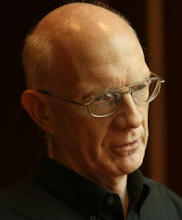
A name that I became familiar with only after reading David Byrne's Bicycle Diaries over the Thanksgiving holiday (a complete review is on its way) was that of Jan Gehl, a Danish urban planner who is largely responsible (as far as I can fathom) for making Copenhagen the world bicycling paragon that it is. I have spoken before about Copenhagen and its self-propagated images and perceptions, and frankly, I've been less than complimentary, because I think that the most vocal Danish bicycle proponents confuse cause and effect and fail to give credit where it's due (Mikael Colville-Andersen, in his talk in Washington DC, did not mention Gehl).

But if he is not personally so, Gehl appears to be close to the source itself. He's an architect and planner, and principal in Gehl Architects (who have one of the coolest Flash web front-ends I've ever seen.)

New York has a significant connection to Gehl as well. The New York City Department of Transportation hired Gehl as a consultant to survey its streets in 2007 and, by no coincidence bicycling is up in that city as well. Perhaps related to this connection, the New York Times has seen fit to recognize Gehl in its ninth annual Year in Ideas issue of the Sunday magazine.

Byrne talks about Gehl in several places in his book. He introduces him talking about Melbourne and the success they've had in making their city much more liveable. Byrne describes Gehl as
a visionary yet practical urban planner who has successfully tranformed Copenhagen into a pedestrian- and bike-friendly city.. We here in New York think that's .. all well and good for the Danes, but New Yorkers are .. independent minded, so that can't happen here. But Gehl reveals that his proposals initially met with exactly that kind of opposition over there: the locals said, "We Danes will never agree to this—Danish people won't ride bikes." [emphasis mine]
There are many reasons to be hopeful and engaged after reading Byrne's book, but I must say that I found the above paragraphs to be the most inspirational I'd read in quite a while.

Thursday, August 13, 2009

What about Free Speech?

Here's a "news of the week"-type story that hits me. Dr. Jason Newsom, an Iraq-veteran MD serving as head of Bay County Health Department in Pensacola, Florida, put up an electronic sign outside his offices with message such as:
  • Hamburger = Spare Tire
  • Sweet Tea = Liquid Sugar
  • French Fries = Thunder Thighs
Everything was going fine until he took on Dunkin Donuts. When he programmed the sign to read:
  • America Dies on Dunkin'
Well, that cut it for a county commissioner who owns a doughnut shop and two lawyers who own a new Dunkin' Donuts on Panama City Beach. They got him fired; his bosses at the state Health Department told him that his leadership wasn't wanted and that he could be fired or resign. He chose to resign May 8 but has reapplied for the job.

This is outrageous. The man's job description not only included but revolved around educating the public about health issues. What could possibly be more on-point for this job than telling people that the crap that they eat is killing them?

Newsom said,
I picked on doughnuts because those things are ubiquitous in this county. Everywhere I went, there were two dozen doughnuts on the back table. At church, there were always doughnuts on the back table at Sunday school. It is social expectation thing.
I am so with this guy. How can people put garbage in their mouths and not be aware of its effect on them? And WHOSE JOB IS IT to educate the public? Obesity, diabetes, hypertension, I'm told these are all epidemic in our society, and the cost is enormous. I hope Newsom wins his job back and if he doesn't, I hope he sues. This is injustice of the most heinous kind.

Sunday, July 19, 2009

Hardware, Software, Wetware

My twin brother Willie (who runs teams of engineers that design highly-sophisticated silicon chips) used to say that there were three kinds of computer "ware": hardware, software, and wetware. Hardware and software (and their distant cousin, firmware) you already know about, if you're using the Web to read this. Wetware is, of course, the user of the computer, and ultimately where the rubber meets the road, so to speak.

It seems to me that when one thinks about bicycle-commuting systems, the same three levels impose themselves. Let's consider them in reverse order:

There's the "wetware" crowd, the people who get out there and "just do it". Sometimes referred to as "vehicular cyclists", they insist that all that they need is the road and the rules for it, which exist everywhere. They tend to be skeptical of structured solutions. The most radical among them can be rather vocal in their beliefs that structure is bad, and will give the powers that be the ability to segregate cyclists to a second-class status. (I count myself in this crowd, although to be sure not one of the radical ones.)

Then there's the "software" crowd, the ones who think that to be safe, cyclists need the protection of bike lanes and striping -- clear demarcations that differentiate cyclist territory from motorist domain. Sometimes referred to as "infrastructuralists", they don't commute as much as vehicular cyclists, simply because bicycling infrastructure isn't so widespread as it could be. Those among this group who do commute regularly therefore are geographically distinct -- they tend to be located out West, in Oregon, Colorado, and parts of California and Washington. Sort of like rare birds with a distinct habitat.

Finally, there's the "hardware" group -- those who think that to be safe, bicyclists need their own separate and independent bikeways. These can be bike paths (typically engineered for about 8 mph, and leading to recreational destinations, not so great for commuting, really) or fully separate bike lanes (preferably with curbs to physically separate them from cars). The Achilles' heel of these approaches is usually the place where they have to come back to the "standard" roadway system. Rejoining the regular transportation system is the most critical aspect of any separated system, and often times it is under-engineered (the "engineering" consisting of a wheelchair ramp at the curb.)

I have a 3/8 mile stretch of bike path paralleling a busy road that I use on my daily commute, and I have learned that rejoining the traffic from that path is by far the most treacherous part of my daily ride.

Recently, a couple of designers have gone quite a bit further and proposed systems that totally separate bikes from the quotidian automobile infrastructure. (Maybe I should categorize these as "super-hardware" people.) Personally, I find them amusingly naïve and impractical. Naïve, because these people are convinced that public financing can be found for these schemes when it's hard enough to find money and will to do simple striping. Impractical, because I don't see where these structures provide the motiviation to ride. If one is motivated, he or she tends toward the "wetware", and all these other things just become (in their absence) excuses not to ride.

I'm not trying to be mean here, it's just my belief that since the advent of the first commercial "safety bicycle", the bike has evolved into a pretty efficient system which works pretty well quite on its own, thank you very much. When I see a new idea to improve the system, I'll be the first to doff my helmet. but it's not so easy to get excited about ideas that just tinker around the edges.

Anyway, let's take a look at a couple of these visionary pretexts for not riding.

Vel0-City is a system of elevated enclosed tubes proposed for Toronto. To its credit, it seems to have the macro-planning thought out in that it appears to be integrated into the mass transit system as a whole. To be fair to the envisioners of this project, I think that protection from the elements in the winter in Toronto is a winner of an idea, but I wonder if the good taxpayers of Toronto will support yet another mode of mass transit, in addition to its existing bus, tram, and metro lines. Like any of those other mass transitways, I suspect, graffiti would pose an ongoing problem.

Remarkably, Velo-City promises a perpetual tailwind, with one-way tubes somehow creating a "dynamic air circulation loop." I could use some of that, but I wonder about the physics!

The Shweeb (no, I don't know where the name comes from -- it seems vaguely German in its tendency to clear the throat) is a pedal powered monorail that exists as an amusement park ride in Roterua, New Zealand. Two pedal-powered capsules swing around a 200M monorail racetrack. Frankly, this looks like quite a bit of fun. The fun rumor is that someone in the London Development Agency has latched on to this idea as a means of mass transit in London. (Don't you just love the "science-fiction pulp magazine cover" look of the rendering at right?) I think this idea works much better as an amusement park race than as a mass-transit system. I'd hate to get stuck behind the little old lady who's doing some urban sight-seeing when I'm in a hurry to get to work. And as much maintenance as Velo-City would require in removing graffiti, Shweeb would require in spades. Believe me, you don't want the capsule that's just been given up by the vomiting drunk!

As a postscript, here's a different take on bikes-as-infrastructure: Hybrid-squared. This system proposes a public bike system (think Vélib) whose bikes have a combination of dynamos and regenerative braking to charge ultracapacitors that then dump their stored energy back into the grid when you return the bike to its station. It's a neat gedankenexperiment, and envisions a credit system where bike-commuting pays for mass transit use, which is a clever scheme. But I wonder if the net energy would amount to a hill of beans, enough to ever pay back the investment in infrastructure. (Is anybody running the numbers on these flights of fancy?)

Wednesday, June 24, 2009

Times Square

I asked my younger daughter (who lives in New York City) what she thought about the new Times Square makeover (where Broadway has been blocked from automobile traffic in a couple of places) and she seemed dismissive. (She might have called it a "gimmick".) I think that she, as an adoptive New Yorker, wants to keep away from touristy areas, and Times Square certainly qualifies.

It's weird to think about cheap folding lawn chairs in the left-over spaces where Broadway used to cross 7th Avenue (which remains open, by the way.) Supposedly, the city takes up the chairs every night and redistributes them every morning. Is this any way to run a national urban landmark?

But there's something important about the New Times Square makeover by the Planning Department of New York City. If nothing else, it's the first U.S. project (ad hoc though it be) in my memory whose momentum is decidedly anti-car. Nicholai Ouroussoff reviews the "design" in this article. Nick O (as I will dare to call him) is right on the money about the unplanned nature of the action (as he says, "this is not the Piazza San Marco in Venice or even Trafalgar Square", but I think it is so important to expose people (even if they are unwitting tourists!) to the idea that the U.S. can have a "public realm" that isn't driven (sorry!) by traffic engineering.

Over at the very interesting blog, World Streets (newly on my blogroll), there is a very interesting article (which promises to be a series) by Paul Barter, a professor in public policy at the National University of Singapore, about "The Battle for Street Space" that is really worth a read (as is much of the other stuff over there.) I see many people from all over the world on that blog talking about 30 kph (yes, kph) speed limits everywhere except on highways. My first reaction is to lecture these people about how this will never fly in the U.S.; the auto is forever king here. But maybe not -- Times Square is a very interesting precedent. It will be fascinating to see where it goes.

Tuesday, May 26, 2009

Bike to Work [Fill in the Blank]

I attended in mid-May the "Bike to Work Day" held along my morning commute in Columbia, Maryland. It was frankly frustrating, and as probably the only regular cycle commuter in attendance, I felt, frankly, out of place. Who were all these people in colored Spandex, and where did they come from? Unlike last year, when it was a downpour, the weather cooperated, and there was a pretty good crowd of people, I'd say 50 or so. A smattering of the attendees are described below:
  • An older middle-aged woman who steadfastly refused to be convinced that riding with the traffic was safer for her;
  • A group of cyclists who had a 10+ mile commute for which they hadn't figured out the route;
  • A group of bicycle cops, off at a small remove, looking like they didn't belong, and no other cyclists were going over to talk;
  • The usual group of recreational club cyclists waddling around on their racing cleats;
  • Maybe (maybe!) one other person who was outfitted for practical cycling (this was the only other bike with fenders, for God's sake.)
I went off to talk with the cops. They were nice enough guys, if a little clueless about what "bike to work" was all about. I asked them about their training, and they said they had received certification from the International Police Mountain Biking Association, which trains and certifies policemen, EMS, and security people. I asked about the coursework, and they emphasizd the low-speed, crowd-oriented part of the training. (I've since followed up on it, and to me, the PDF coursework summary offered by the IPMBA looks pretty good for a 3 day course.) As usual, I would say, the cops were a little too focused on the hardware. They kept looking at me a little strangely, maybe because I was wearing my "Eclectic Shock" T-shirt (image at right.)

But, getting back to the point. What is the purpose of Bike to Work Day? Is it
  1. To convince people that they can physically manage the ride to and from their place of work? Maybe it does that, but I also suspect that there are enough mishaps (from flat tires, sunburn, and being late to work from simply getting lost) that there is a significant risk that the opposite effect may be achieved.
  2. To allow local politicians to conspicuously ride a bike and thus try and capture the bike riding community as supporters? I suspect that this plays no small role in the planning. For sure, I didn't hear anyone talking about serious new bikeway planning or sharrow painting. (Unlike lucky Boris, see previous post.)
  3. To educate people about safety? There were State of Maryland DOT brochures out about "Bike safety" competent enough I suppose in their content, but they featured a little girl in pigtails on a banana-seated bike as their protagonist, thus perpetuating the image of bicycling as a children's activity.
  4. To ecucate people about what they really need to know about how to commute successfully? In this respect it failed miserably. Success as a cycle commuter requires planning and motivation. Resources promoting either of these were nowhere in evidence.
I suspect the real answer is 2, and so I've become more than a little jaded about bike to work day. I've joined the ranks of Bike Snob NYC who put out a PSA on Bike to Work month. (More and more, I like Bike Snob, even if he does leave me rather breathless.)

Think about it -- even the name is wrong. What does "Bike to Work Day" mean? It should be "Bike to Work Unless It's Bad Weather", or "Bike to Work Year Around". I've come to terms with the fanatical streak that keeps me on my bike and I enjoy the side-benefits, but I must admit I don't have the least practical idea about how to convince others to become regular practical cyclists. That "regular" part is pretty important -- how do you make bike commuting a habit?

Tuesday, March 31, 2009

Bikes for the World

We interrupt this blog to present a brilliant idea. To begin thinking about this idea, ask yourself: How many unused bicycles are going to waste, simply collecting dust, in American garages? How could they best be put to use?

One continuing theme I hear on the liberal-media outlets that I frequent is that the third world needs development, not aid. Aid (in the form of money) is corrupting, too easily diverted, and ulitmately misses the target.

But... what if the aid were in the form of... bicycles?

Bikes for the World is a project of the Washington Area Bicyclist Association whose mission is to collect valuable but unwanted bicycles and related material--parts, tools, and accessories--in the United States and deliver them at low cost to community development programs assisting the poor in developing countries. The donated bikes provide needed and affordable transportation to laborers, micro businesspeople, farmers, health workers, and students.

As much as possible, Bikes for the World uses the donated bicycles to help set-up self-sustaining bicycle repair operations which can make enough money to pay the direct costs for subsequent container shipments of donated bicycle.

Think about donating, if you can, to this brilliant initiative. Even better, if you live in the Washington DC area, contribute your time and energy to fixing up and containerizing bikes.

PS: mileage update, 3/31: 721 miles. (This is where I was the third week of May last year. Yes!)

Sunday, March 22, 2009

Chevrons for All

In doing a little more research on sharrows, I came across a brand-new (only two weeks old!) study on sharrows done by the city of Bellevue, Washington. It's worth a download and read. Much of the methodology is very similar to the earlier City of San Francisco (CSF) study.

Continuing in the spirit of my last two posts, I've decided to do a little "free art" for the public. I've made a couple of full-size graphics of chevron-style sharrow images, done to two different municipal standards. They are ready to be printed on a large-format printer and cut into a large sheet of (something). Then, well, do with it as you will. Hang it on the wall, or use it, uh, as a focus for night-time activity.

Images: The images are full-size PDF graphics. They are fairly compact (in terms of file size). The image based on the CSF "chevron" style (download here) is smaller and will fit into a 4' x 8' sheet of stencil material. The Bellevue image (download here) is rather larger and would require a 4' x 11' or 4' x 12' sheet of material. I've slightly modified the CSF image by adding "webbing" for easy positioning of the cutouts. This will be a single-piece stencil. The Bellevue image isn't modified from their spec, which is much more detailed, and is a multi-piece stencil.

Positioning on roadway: The CSF guidelines were for the center of the image to be 11'-0" from the curb in areas of parallel parking. The Bellevue guidelines call for the center of the image to be "about 11 feet from the curb where parking exists" and, with no parking, "about 3 feet out from the curb."

Methodology: Well, the standard approach is to print the PDF full size at a printing shop that handles large-format printing, then to transfer it to stencil material such as corrugated single-face plastic sheet and cut it out (be careful, be careful, BE CAREFUL!)

It is, however, difficult to get an image out of my head, and that is Joshua Kinberg's utterly brilliant "Bikes Against Bush" rig (website here, video here) done for the New York City Republican Convention. The resolution of these images are of course a lot higher than the rather crude (brilliant! but low-rez) letters of Joshua's first experiment. But it doesn't take a genius to visualize a higher-rez "bike dot matrix" system that could handle one-color graphic images as well as just text. This really sounds like a job for JK or the Graffiti Research Lab of NYC. This would be a technological tour-de-force for the "Urban Repair Squad", wouldn't it?

Sunday, March 15, 2009

The Urban Repair Squad

There's an interesting group of urban cyclists in Toronto who are practicing a form of "street art". They call themselves the "Urban Repair Squad", and a website showcasing their work can be found here. The manifesto of the URS goes something like this:

MISSION:

To encourage bicycling as an antidote
to the poison that is car culture.

To invert the status structure of the commons,
returning priority to pedestrians and bicyclists over cars.

To create an infrastructure
that promotes polite sharing of the roadway.

To employ the concept of Critical Mass,
encouraging cyclists to bond together
and more safely take back their rightful place
on the public roadways.

To encourage citizens to reclaim
ownership and stewardship of their public space.

To actively construct a positive future
of what urban transporation could be
by installing it NOW.

Your city is broken.
Don't wait for the bureaucrats to fix it.
DO IT YOURSELF.
So, what doe the Urban Repair Squad do, exactly? They surreptitiously paint bike lanes and sharrows. This is usually done under cover of darkness ("rush hour bike lanes.") Tom Vanderbilt, in his blog, notes that they do this while "disguised as municipal workers." This is an interesting and amusing (if true) twist on the term "street theatre", entertainment not only in the street but in fact changing it. Vanderbilt notes that they have painted over 6kms of bike lanes in Toronto.

If you download and read the URS manual, it outlines (sometime in amusing hand-drawn comics) the process and results of this urban guerrilla activity. I think that, as long as the bike lanes are well-chosen and well-executed, this is a laudable activity, although it raises some potentially difficult questions, e.g. what happens if a cyclist is struck by a motorist while in a guerrilla bike lane? Is the liability of the motorist somehow reduced because of the illegality of this urban infrastructure? (I'm reading a book on the legalties of cycling, which I will post on in the near future, that will hopefully point the way to some answers on this.)

PS. The URS website linked above is claimed to be not an "official" web site. It is maintained by a photographer named Martin Reis who claims to be only a "fan" and documenter of the URS activities and not a participant (sure, Martin, sure! :)

Sunday, February 22, 2009

Good Cop / Bad Cop [Redux]

This New York Times article gives a recent update on the NYC cop who brutally shoved a cyclist at a Critical Mass night ride on July 25, 2008. He's Gone! This is good news, and actually done in a pretty timely fashion (you may not agree with this, but the wheels of justice do turn slowly.)

Pogan was indicted on December 16, 2008 for this incident. The NYPD said he was fired about February 9, 2009. (There was no press release on this. It's a little understandable that the NYPD doesn't care to shine a light on its most questionable officers, but on the other hand, it's also a clear PR opportunity missed.) The press accounts say that charges have been dismissed, and that a "spokesman" for Pogan (do 23-yr old cops get spokesmen now?) said that Pogan resigned, and was not fired. In any case, the dropping of charges was no doubt a quid pro quo for getting rid of this bad apple, and the NYPD just wanted it done.

I first reported on this last August. You can see a video of the incident here (my original YouTube link has gone stale).

I feel pretty strongly about this (in case you hadn't guessed) as I'm sure others do. I guess this is because I think most police understand their job is to protect cyclists (along with everyone else). Riding to work this week on a cold morning, I was breezing by two Howard County police officers engaged in drivers-side-window conversation. The one facing the road who could see me gave me a wave as I went by. It was respectful, possibly because she (the cop) was a cyclist and it was below freezing that morning. There are good cops out there who appreciate cyclists (particularly ones who practice safety). What a great world it would be if we could count on all cops to respect cyclists this way!

A second rather obvious thought on this. Since the seminal amateur videotaping of the beating of Rodney King, video cameras are now everywhere. There may be one in your pocket right now. The world has changed, and while pictures can be altered electronically, the ubiquitous vid-cap still serves as a vital witness that didn't exist even five years ago. I've given some thought to mounting one of those Flip Mino camcorders on my seatpost, just to record cars overtaking (and their license plates). It's overkill, but it's an idea to consider. Maybe for a future topic on "Your Bike's Data Network".

Tuesday, January 13, 2009

Immigrant Bike Commuters

If you live in an urban environment, you've seen them. Adult immigrants (almost always Latinos) cycling in work clothes on Wal-mart bikes, too slowly, on streets that are too busy, with no helmets. Every time I see a such an immigrant commuter, I cringe, out of worry for their well-being. I know they are just trying to get to or from work in the most cost-effective way possible.

Hector Rapalo (shown at right) was killed over the Christmas holidays in Islip, NY while on a bicycle. There's not much to the story. The police report is here, and here's an editorial in the New York Times (from Jan. 11) that drew my attention to this particular incident. The editorial also mentions the cases of Santos Javier Ramos and Enrique Aguilar-Gamez. The editorial suggests that some of the hit-and-runs (and yes, there are multiple ones) are hate crimes. My general good-naturedness makes me want to doubt this, but then I went to this comments posting on the Ramos incident, and frankly, too many of the comments are pretty sickening in their xenophobia and racism.

The NYT editorial generalizes a little too much: it says, "Bicyclists and suburbs are an uneasy fit," with which I utterly disagree. More accurately, unskilled bicyclists and commuting are an uneasy fit, and it makes no difference your skin color or national origin, although (I submit) the economic status, access to Internet, and language barrier of Latino immigrants exacerbates the situation for them.

So, how can we make this situation better? I can think of several ideas, all of which are "unfunded mandates":
  1. An initiative on the part of the League of American Bicyclists to provide Spanish-language and/or bilingual versions of the "Road 1" course;
  2. Concurrent with (1) above, scholarships from HHS or INS to help legal immigrants (or for that matter, low-income Americans) to attend these classes;
  3. Since most of these bikes (I suspect) are $80-to-$100 models bought at Wal-Mart, I'd like to see Wal-Mart provide a certificate for a free or very low-cost ANSI-compliant helmet (nothing fancy, to be sure) for every bike sold;
I'm no policy whiz—I really don't know what I'm doing in this area. But there is simply no defensible reason for the the least-affluent in our society to be deprived of access to information that will make them safer as they try to use cost-effective, environmentally-friendly transport.