Showing posts with label green lifestyle. Show all posts

Monday, December 14, 2009

Jan Gehl, Planner Extraordinaire

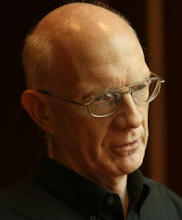
A name that I became familiar with only after reading David Byrne's Bicycle Diaries over the Thanksgiving holiday (a complete review is on its way) was that of Jan Gehl, a Danish urban planner who is largely responsible (as far as I can fathom) for making Copenhagen the world bicycling paragon that it is. I have spoken before about Copenhagen and its self-propagated images and perceptions, and frankly, I've been less than complimentary, because I think that the most vocal Danish bicycle proponents confuse cause and effect and fail to give credit where it's due (Mikael Colville-Andersen, in his talk in Washington DC, did not mention Gehl).

But if he is not personally so, Gehl appears to be close to the source itself. He's an architect and planner, and principal in Gehl Architects (who have one of the coolest Flash web front-ends I've ever seen.)

New York has a significant connection to Gehl as well. The New York City Department of Transportation hired Gehl as a consultant to survey its streets in 2007 and, by no coincidence bicycling is up in that city as well. Perhaps related to this connection, the New York Times has seen fit to recognize Gehl in its ninth annual Year in Ideas issue of the Sunday magazine.

Byrne talks about Gehl in several places in his book. He introduces him talking about Melbourne and the success they've had in making their city much more liveable. Byrne describes Gehl as
a visionary yet practical urban planner who has successfully tranformed Copenhagen into a pedestrian- and bike-friendly city.. We here in New York think that's .. all well and good for the Danes, but New Yorkers are .. independent minded, so that can't happen here. But Gehl reveals that his proposals initially met with exactly that kind of opposition over there: the locals said, "We Danes will never agree to this—Danish people won't ride bikes." [emphasis mine]
There are many reasons to be hopeful and engaged after reading Byrne's book, but I must say that I found the above paragraphs to be the most inspirational I'd read in quite a while.

Monday, November 16, 2009

Extreme Cyclist Holiday

I didn't really start out intending to have an Extreme Cyclist Holiday in Houston. I just meant to take my folder along and get some riding in, instead of spending all my time in a car, worrying about gas, parking, etc. Then things just sort of got out of hand.

Let's back up a little. At the last minute, I decided to go to the Rice University homecoming to hopefully see some old friends and hang out some with my older daughter Claire, who helps run a bookstore there. I booked a flight, and found my usual close-to-Rice hotel had some good rates, so I got a room. Then I thought, "Hey, I wonder if I can get from the airport to reasonably close to my hotel using mass transit?" Hopping on the Houston Metro website and entering a couple of addresses, I found that I could catch a bus right at the airport that took me to within a quarter-mile of my hotel with no transfers. Wow. Sixteen miles in Houston for a buck and a quarter. Double wow. (The image at right is from the Houston METRO trip planner, very convenient.)

So, that axed the rental car, which saved me about a hundred bucks, probably a hundred thirty with gas. Ka-ching. But it also meant that my in-town trips would be either by bus, by taxi, or by bike. (Now there's an easy decision.) Houston is flat, and the November weather in Houston is really perfect for riding (high 60's to mid 70's, and not terribly humid). And good weather (no rain) in the forecast.

So, to make a long story short, I spent an entire weekend (three days, Friday, Saturday, and Sunday) in Houston, Car City USA, and not once did I even get into an automobile. It didn't seem strange until early Sunday when I realized that I hadn't been in one. Of course all my old classmates thought it weird, but I caught some whiffs of envy among the incredulity, when they asked, "You're kidding! You BIKED to the party?"

Good things: Saving money, great exercise, the flatness of Houston (my little Dahon folder is great for packing, but really not much for hills), Rice University bike parking facilities (basically, good secure bike racks everywhere), not having to worry about parking a car, Daniel Boone's Cycle Shop, and great weather.

Some people complain about Houston drivers. I was told by the bus driver (friendly guy) coming into town that Houston drivers don't respect cyclists, but I had zero bad experiences over about 60 miles in 3 days. Of course I was in a university part of town, where there are quite a few cyclists, but overall, no complaints from me about Houston motorists.

Not so good things: Houston has the world's narrowest bike lanes (where they have them), and the paving in Houston is the pits. Literally. Basically, Houston is built on the flat gulf-coast plains that have a lot of clay in the soil. This "gumbo" as it is called is just hell on pavement. I found myself weaving a lot more than I wanted to be to avoid really nasty potholes and large cracks.

I even had an accident because of the bad roads! It was late at night and I was riding back to the hotel from my daughter's apartment. I hit a bad pothole (hard to see) and went right over the bars (not hard to do on a short-wheelbase, small-wheeled folding bike.) Luckily, no injuries beyond some bruised kneecaps, as I wasn't going all that fast. Not even any torn clothes.

The funny thing is, I picked myself up and dusted myself off, determined the bike was rideable (it needed the derailleur hanger bent back into proper position) and proceeded home. The next morning, I got up early and looked at bike and saw what I missed the night before: my cyclo-computer was missing. Muttering under my breath at my obliviousness the night before, I hopped on the bike and went back to the accident site (I figured if I waited, there was more chance of it getting smashed by a car) and there it was, flung up in a driveway, fully operational. I clipped it back on and went back to the hotel for breakfast.

But it's been almost 30 years since I had an over-the-bars experience! I'll probably be sore for several more days, but the only cure for that is more riding. I really wouldn't mind not ever going over the bars again, ever. Good thing I was wearing gloves. But the accident seemed to underscore the "extreme" quality of the weekend.

I have to say though, I wouldn't hesitate in the least to do a pure "bike holiday" again (except for the accident part). A little planning can yield a lot of riding, and a lot of fun.

Tuesday, November 10, 2009

Blighters Rock

No, it's not really writer's block, I've just been, ah, busy. We're in busy season at Nemetschek, meeting our design deadlines for the next great version of Vectorworks, and I've had my head down.

I've had my head down cycling, also. As I knew would happen, I "made my year" and met my goal of 3300 miles last week. In retrospect, it seems kind of ho-hum. We'll see how many miles I make by the end of the year and I'll try and do some kind of estimation of what percentage of work days I rode to work. I have to say, though, my utilization has got to be really high, if you deduct for business trips. I think I use my car to get to work no more than 2 days per month, at least for the past 3 or 4 months. Good weather (that is to say, reasonably clear weather) helps.

When it comes to understanding urban cycling, there's nothing like statistics. The city of Fort Collins, CO has just released a compilation of statistics about cycle-auto accidents over a 30 month period and I'm working on some analysis of that as well as accident stats from elsewhere. But the news item I've read recently that has I think the most significance is new bicycle usage stats from New York City. Since 2007, the ridership is up 66%. (That is to say, cycling levels in 2009 are 166% of what they were in 2007.) Wow. Check out that chart. (That is a zero-based chart!)

What can account for this? It's pretty simple, really. There's a serious commitment by the NYC DOT to get people bicycling. The city has substantive programs in:
  • Bicycle education and safety;
  • Bicycle parking;
  • Bicycle/Mass Transit interface; and
  • Bike street infrastructure.
The city has created 200 miles of bike lanes in 3 years and is committed to 50 miles of lanes per year until it completes its bike network. Check out the main NYC-DOT page on cycling and drool. For anyone outside of NYC, it is just enviable, to live in a city that has resources and uses them to Make Things Better.

Tuesday, September 8, 2009

Bike Parking at Union Station

So, last Wednesday, I was on my way in to DC for a meeting on Capitol Hill—not at the Capitol, I'm no VIP, but at one of the congressional office buildings. When I go to DC, I virtually never drive in to town, because I'm not familiar enough with all car parks, and navigating DC without help of a local or a skilled navigator can be a frustrating experience. So instead, I drive to the Metro stop nearest my office (Greenbelt, the north terminus of the Green Line) and ride in on the train.

(Background: If you know Washington, you'll know that the stop to take to get to the capitol office buildings is Union Station, the main (i.e. only) railroad station in DC, and that's where I was headed. Union Station is served by three passenger railroads: Amtrak, MARC (the Maryland commuter train system) and VRE, Viriginia Railway Express, the Northern Virginia commuter train system. It is quite a hub for federal workers, and, I'm guessing, one of the top 5 commuter hubs in the US.)

So, back to the story. I'd just gotten in my car and started the trip to to Union Station, and was listening to Morning Edition on NPR, and lo and behold, the very first story that I heard was about Bikestation, a new bicycle parking facility at Union Station. The powers that be in WDC, bless 'em, are building a place for commuters (especially rail commuters) to store their bikes so they can get into town, grab their bike, slam on the panniers, and get to work from Union Station. (The DC cabbies are going to hate it.)

There are very high-tech motorized multi-level racks to hold the bikes, the bikes will I think be monitored, and I'm sure there will be subscription pass cards, etc. The building is I think a little overdone, but hey, it's Our Nation's Capital! The excess is part of the point—this project is as much about advertising the bicycle as a form of practical transport as it is utilitarian parking. (For a definition of "utilitarian parking", see the second picture, which is of bike parking as it currently exists at Union Station.)

So here's to the Bikestation at Union Station—long may it serve those who work (and bike) in WDC.

Saturday, July 25, 2009

Creepy

Is it just me who finds the new Toyota Prius ads creepy? Apparently.


Yes, I know that the Prius is the most fuel-efficient car out there. Yes, I know the Munchkin-like seething mass of humanity is mostly computer-augmented, just like the Coliseum crowd effects that won the Oscar for the movie Gladiator. But it still creeps me out.

Part of what I know about the Prius is this: It's a car. (well, duh.) And that means it's big and heavy (relative to my scrawny transporation system, that is.) Think about it this way: A Prius hauling a single person (most of them do) is getting (let's say) 50 person-miles per gallon of gas, (which contains 31,548 kcal), or 31,548 / 50 = 630 kcal per mile. On a bike, I can cover roughly 15 miles per hour burning 700 kcal, which works out to 700 / 15 = 46.7 kcal per mile. So my system (for a single passenger) is 13.5 times as efficient as a Prius. So if a Prius gets 50 mpg, I get "675 mpg". (I know that's a bit of a red herring.)

In honor of this ratio, I'vc created a graphic. You can download the high-rez version here, if you want to put it on a t-shirt or something.

But the latest data point about hybrids is a truly unexpected one: according to insurance statistics, hybrid drivers drive more, get more tickets, and have more accidents than non-hybrid drivers. (Perhaps they are distracted by their hypermiling techniques?) According to the study cited here, the decreased guilt associated with improved fuel-efficiency increases the number of discretionary trips by up to 25%, largely offsetting any petroleum savings.

It is, after all, just a car.

Thursday, July 16, 2009

Practical Cycling Defined

I define practical cycling most succinctly as "cycling miles that displace motor vehicle miles."

A group of six (only six?) high-school counselors has done a significant bit of practical cycling by touring college campuses (in my stomping ground, in Maryland, Pennsylvania, and Delaware) to check them out for their student counselees. Twelve days, more than a dozen colleges. 400 miles. (Now that I think about it, although that's only 33 miles a day, it still would take some selling to convince most people not doing serious cycling already that they could handle that.) This is significant. Yes, it's billed as "combining a serious tour with their love of bicycling," but this is ordinary people doing a sustained tour at 1/4 to 1/3 the rate of the Tour de France.

The story in the New York Times is here.

I'm impressed, and I hope their numbers grow next year.

Tuesday, May 26, 2009

Bike to Work [Fill in the Blank]

I attended in mid-May the "Bike to Work Day" held along my morning commute in Columbia, Maryland. It was frankly frustrating, and as probably the only regular cycle commuter in attendance, I felt, frankly, out of place. Who were all these people in colored Spandex, and where did they come from? Unlike last year, when it was a downpour, the weather cooperated, and there was a pretty good crowd of people, I'd say 50 or so. A smattering of the attendees are described below:
  • An older middle-aged woman who steadfastly refused to be convinced that riding with the traffic was safer for her;
  • A group of cyclists who had a 10+ mile commute for which they hadn't figured out the route;
  • A group of bicycle cops, off at a small remove, looking like they didn't belong, and no other cyclists were going over to talk;
  • The usual group of recreational club cyclists waddling around on their racing cleats;
  • Maybe (maybe!) one other person who was outfitted for practical cycling (this was the only other bike with fenders, for God's sake.)
I went off to talk with the cops. They were nice enough guys, if a little clueless about what "bike to work" was all about. I asked them about their training, and they said they had received certification from the International Police Mountain Biking Association, which trains and certifies policemen, EMS, and security people. I asked about the coursework, and they emphasizd the low-speed, crowd-oriented part of the training. (I've since followed up on it, and to me, the PDF coursework summary offered by the IPMBA looks pretty good for a 3 day course.) As usual, I would say, the cops were a little too focused on the hardware. They kept looking at me a little strangely, maybe because I was wearing my "Eclectic Shock" T-shirt (image at right.)

But, getting back to the point. What is the purpose of Bike to Work Day? Is it
  1. To convince people that they can physically manage the ride to and from their place of work? Maybe it does that, but I also suspect that there are enough mishaps (from flat tires, sunburn, and being late to work from simply getting lost) that there is a significant risk that the opposite effect may be achieved.
  2. To allow local politicians to conspicuously ride a bike and thus try and capture the bike riding community as supporters? I suspect that this plays no small role in the planning. For sure, I didn't hear anyone talking about serious new bikeway planning or sharrow painting. (Unlike lucky Boris, see previous post.)
  3. To educate people about safety? There were State of Maryland DOT brochures out about "Bike safety" competent enough I suppose in their content, but they featured a little girl in pigtails on a banana-seated bike as their protagonist, thus perpetuating the image of bicycling as a children's activity.
  4. To ecucate people about what they really need to know about how to commute successfully? In this respect it failed miserably. Success as a cycle commuter requires planning and motivation. Resources promoting either of these were nowhere in evidence.
I suspect the real answer is 2, and so I've become more than a little jaded about bike to work day. I've joined the ranks of Bike Snob NYC who put out a PSA on Bike to Work month. (More and more, I like Bike Snob, even if he does leave me rather breathless.)

Think about it -- even the name is wrong. What does "Bike to Work Day" mean? It should be "Bike to Work Unless It's Bad Weather", or "Bike to Work Year Around". I've come to terms with the fanatical streak that keeps me on my bike and I enjoy the side-benefits, but I must admit I don't have the least practical idea about how to convince others to become regular practical cyclists. That "regular" part is pretty important -- how do you make bike commuting a habit?

Sunday, May 3, 2009

San Francisco April-May 2009

So, within one month I've managed to visit both Seattle and San Francisco, both west coast towns that are reputed to be bicycling cities (with the third of the West Coast Bicycling Triplets being Portland, of course.)

I arrived on Wednesday afternoon and arranged to go get drinks and a bite with my friend Scott at Zeitgeist, a fun bar and grill on Valencia street in the "SoMa" district of San Francisco. Arriving at my hotel and unpacking my bike, I discovered I'd left my pump at home (insert self-administered dope slap to forehead here) and so I looked up a nice bike shop called Freewheel just a few blocks south of Zeitgeist. I got down there in plenty of time, got the exact pump I was looking for (a Topeak Road Morph), and had time to do a little sightseeing on South Valencia before heading back north to grab a couple of beers and a burger with Scott.

Thursday night, my company Vectorworks was co-host of what turned out to be just a bang-up party —the City To Green Party— for architects, cyclists and artistic locals at the 3A Gallery on South Park street. In the gallery was an exhibit of track bikes from the second half of the 20th century. The gallery proprietors hung a show of track bikes on the walls and described the provenance of each bike, and detailed descriptions of the bike realization as a work of art. Here's a transcription of one of the the bike descriptions:

---------------------------------------------------------
Automoto, France, 1940s.


Cycles Automoto was a pioneering French maker of motorcycles and bicycles founded at the turn of the 20th century. Well regarded for thoughtful design and meticulous construction, Automoto grew in popularity until merging with the Peugeot group in the early 1960s. Part of that popularity is attributable to the company's wide ranging product offerings, whose bicycle line along grew to include 20 models. When an Automoto advertisement boldly declared, "Le Triomphe De La Qualité Française", few in sound conscience would have doubted the claim.

Built for the professional track racer

Restored condition
Magistroni cranks
Chater Lee Pedals
Major Taylor stem

Collection: American Cyclery of San Francisc
o
---------------------------------------------------------

Quite refreshing. A very well attended party, right to the end, as you can see from the photos. I've often wondered why the intersection-set of architects (particularly young architects) and bicyclists is so large. At least 30 attendees (including yours truly) arrived on bike and were graciously attended to out front of the gallery in a nice bike parking lot attended by the San Francisco Bicycle Coalition , a club of more than 10,000 members. Very, very nice work.

This poem was transcribed in chalk on the walls of the foyer of the 3A Gallery:

Ode to Bicycles

I was walking
down
a sizzling road:
the sun popped like
a field of blazing maize,
the
earth
was hot,
an infinite circle
with an empty
blue sky overhead.

A few bicycles
passed
me by,
the only
insects
in
that dry
moment of summer,
silent,
swift,
translucent;
they
barely stirred
the air.

Workers and girls
were riding to their
factories,
giving
their eyes
to summer,
their heads to the sky,
sitting on the
hard
beetle backs
of the whirling
bicycles
that whirred
as they rode by
bridges, rosebushes, brambles
and midday.

I thought about evening when the boys
wash up,
sing, eat, raise
a cup
of wine
in honor
of love
and life,
and waiting
at the door,
the bicycle,
stilled,
because
only moving
does it have a soul,
and fallen there
it isn’t
a translucent insect
humming
through summer
but
a cold
skeleton
that will return to
life
only
when it’s needed,
when it’s light,
that is,
with
the
resurrection
of each day.

- Pablo Neruda, 1956

I broke 1000 miles for the year so far on the last day of April on the streets of San Francisco. For me, this really cut it. Call me fickle (less than a month ago I was extolling Seattle,) but San Francisco is US Bicycling City Number One in my book.

Tuesday, April 28, 2009

The Bicycling Paradox

Karl Ulrich, a professor from Wharton School of Economics in Philadelphia (and an avid bicycle commuter,) is experiencing some significant notoriety in bicycling blogs as a result of a paper he has written about the "true" environmental savings of bicycle transportation displacing automobile transportation. Most succinctly put, his thesis is this:
Practical bicycling is not a net gain for the environment because the energy savings due to the use of human power for transportation is offset by the increased energy used by living longer due to better health.
I think this paper has good entertainment value, and I'm pretty sure that Ulrich is writing this as a Gedankenexperiment with a little bit of tongue in his cheek. There are a few aspects of his logic and assumptions that I'm not sure I buy, however:

Ulrich correctly calculates the net efficiency differential of auto to bike at approximately 1:32 (I have replicated this calculation elsewhere) but falls into the trap of making a big deal out of the energy cost of agricultural production, thus lowering the differential in the range of 1:6 to 1:9. (This is a pretty big range, by the way.) As I've said before in a letter to the League of American Bicyclists magazine, I think this is a slippery slope. Since food is such an energy-expensive proposition, does Ulrich consider the food consumed by the auto driver? (Or by the driver of the gasoline tanker truck, for that matter?) What about vegetarian locavore cyclists?

Ulrich rightly and justifiably compares the practical cyclist to the athlete who doesn't abandon the use of the motor vehicle. (This includes all those athletes at the health club as well as recreational cyclists). The energy profile is shown in the graph at right. Note that, even with the "stacking of the deck" done by Ulrich in the food-production energy discussion above, the practical cyclist is still superior to the sedentary motorist, if not by much.

There is an excellent discussion of the papers and its putative "holes" here.

By the way, Ulrich is also the creator of the Xootr Swift folding bicycle. If you go to this link for the Swift, and click on the "Guidelines for commuting by bicycle" link, you'll find one of the better one-page summaries of how to be prepared to commute by bicycle, including some recommendations for cold-weather dress that pretty closely parallel my earlier post. Hey, Ulrich is right up the road, in Philly. Not too far from Central Maryland where I live, so the guidelines should be similar. I like the Swift also. Not many folders are specifically sized for the tall (6'5"+) rider, but the Swift has an "XXL" size that is specifically aimed at us tall guys.

Friday, April 24, 2009

AIA-SFO: Integrating Bikes and Business

Next week I'll be attending the American Institute of Architects (AIA) convention in San Francisco. Architects are (at long last) becoming environmental leaders in the professional communities, and "cycling" and "environmental" fit together nicely for me, so I'll be taking a folding bike to push the envelope of "green consciousness" for architects. I don't want to be unfair here—I've noticed that there exists a large intersection among architects, cyclists, and (even) bike builders, it's just that, when it comes to cycling, and particularly practical, everyday cycling, there's a lot more lip service than action. So I hope to turn that around in a small way.

My company, Nemetschek NA, produces a computer-aided design software called Vectorworks. It's used primarily by architects (as I am), but it has great 3D and solids capabilities, and I want to design bikes with it. (This would be just another integration of life, work, and avocation for me.) I've designed buildings and shoes with it, but not yet bikes. If you've used CAD to design bikes, I want to talk to you, so leave me a comment and a way to get in touch!

San Francisco is a city where I've spent time before. And it has hills that are serious challenges to walk up, much less bike up. I don't think I have a bike set up with the gears needed for all of San Francisco.

That's the bad news. The good news is, I'm going to be spending almost all my time in the "SoMa" (South of Market) area, which is quite flat, by SFO standards. Following one of the guiding principles of Practical Cycling, "Research your Route", I've done some homework on SFO. Here's a nifty topographical map of the city overlaid with bike routes. Below is a Google map of what I'm going to be up to. The aqua-colored destination in the middle of the Castro district is where my friend Scott and his wife Polly reside, and that is at the top of a pretty awesome hill, one I don't think I'd try and tackle unless I had about 22" gears. So Scott and I will have to meet elsewhere (maybe at the "Zeitgeist" bar, which is I'm told a favorite of the local bike couriers), or I'll take the bus to his house.


View SFO AIA Convention 2009 in a larger map

So, I've decided to take my folder for the flat areas. I bought (off my brother, who wasn't using it) a Dahon "Speed D7" folder, (mine being about 8 years old, not quite as nice as the one in the link), and a Samsonite "Oyster" standard-airline-case (SAC) that it fits in for transport. I spent a weekend overhauling it, getting it properly equipped for minimal practical cycling (tool kit, pump, lock, patches, lights,) and learning how to pack it. (I made some breakthroughs in this area. There are websites that state that you can't pack a Dahon folder in an Oyster without removing the stem and handlebars, a major pain since I added a cyclocomputer mount. I found that I need only remove the wheels, and everything else fits neatly. (I'll leave the details of that for another post.)

I was in Seattle at the beginning of April and used the trip out there as a first shake-down trip for the travelling cyclist use-case. Excepting a tangled chain on initial unpacking of the bike, everything went surprisingly well. I found the little Dahon, while a bit short in the leg for my tall frame, to still be an acceptable ride for up to, say, 20 miles. I put about 75-80 miles on the Dahon in 5 days, in Seattle, a city not devoid of hills itself. The gear range is rather limited, at both the top and (somewhat surprisingly, given the 20" wheels) the bottom.

So, if you're in San Francisco next week and see the very tall guy on the clown bicycle wearing the Vectorworks shirt, that will be me. Flag me down and tell me you're a reader of A Practical Cyclist, and I'll be glad to invite you to the Vectorworks "City to Green" party on Thursday night! And if by chance you're attending the AIA convention, please drop by the Vectorworks booth, #1651, and let's talk bicycles, design, and computer-aided design.

Wednesday, March 11, 2009

Lawfulness & Licensing (Survey)

Once again, the NY Times has a well-written screed about urban cycling. It's here. I have to say that the sentiments of the author, Robert Sullivan, pretty much mirror mine. Riding in an urban environment carries inescapable risks, and it's simply imperative to avoid the risks we can by obeying the rules of the road. As one of the article commenters (from Davis, CA) responds, "same roads, same rights, same rules".

Sullivan, in the concluding paragraphs of his article, makes four suggestions for "better Bike PR":
  • Stop at intersections;
  • Don't ride on sidewalks;
  • Don't ride against traffic (especially on one-way streets); and
  • Signal your turns;
This is all pretty basic stuff, and I agree that universally doing these things will improve the lives of all urban cyclists (practical and otherwise!) but lately, I've been thinking further afield, deeper about this problem, venturing into what I'm pretty sure will be unpopular territory.

Simply put, the question is this:
If bicycles are vehicles, prone to the rules of the road like cars, and fundamentally unlike pedestrians, should bicycle riders who use public rights-of-way be licensed to operate their vehicles?
With no small amount of trepidation, I'm coming round more and more to the conclusion that we should be licensed. I think this solves two fundamental problems that otherwise show no clear way of being solved. These problems are:
  • Lack of Skills Training: Many, many cyclists on the road are woefully unprepared, both physically and mentally, for dealing with traffic issues. They don't know how to recognize dangerous situations and how to avoid them. Any licensing program would have to have a concomitant skills development and testing program to justify the awarding of licenses.
  • Lack of Moral Hazard: If I'm a driver, and I behave irresponsibly, then my license can be revoked, and I have to cease driving (at least if I want to obey the law). This threat of "points" has a strong effect of keeping my more animal impulses in check.
I look at "outlaw" cyclists, the heedless or reckless ones, and see people who are behaving as though under the influence of a drug. (See this post over at the Momentum website for yet another essay / perspective on this by Deb Greco.) Certainly cycling as an experience can convey a sense of euphoria, and it is the dangerous aspects of this euphoria in a public sphere that vehicular laws are intended to regulate.

The question is, should bicyclists play offense or defense? There are those, uh, "colorful cyclist personalities" who insist on the right to play offense. They assert that in Europe cyclists are treated with far greater deference by motorists, and that's the way it should be here, dammit. I'm a pragmatist, and I believe in defense. Cars are big, hot, massive, dangerous. To assert that it "should be otherwise" is all very well, but it is what it is. Much as I like Europe, much as I've enjoyed cycling over there, the US is different. I say that for me, for here, defense is the game.

So, time for an informal, non-scientific survey. The Blogger system doesn't (at least as far as I have discovered) allow for a formalized survey system, so let's do an informal one. If you have read this far, please do me the favor of commenting on this blog post with a letter signifying one of the following survey preferences. Honor code, here; don't be casting multiple votes (I'm pretty sure I can delete multiple votes after the fact, anyway.) As I've implied above, this is primarily aimed as the US, so if you're voting from overseas, it would be helpful for you to say where you're located. Feel free to comment further, but start out your comment with one of the letters A through D:

Question: Should bicycle riders who use public rights-of-way be licensed to operate their vehicles?
  • A. Yes; time to get serious; Particularly as the number of cyclists grow, it will make the roads safer for all of us.
  • B. Partly; Require licensing for bicyclists using roads that have speed limits >= 30 mph. This will allow "family use" in suburban 25 mph zones.
  • C. No; If we provide bike lanes, the safety problem will go away, except for those idiots who want to take crazy risks with their own necks.
  • D. Hell, No; I demand the right to do as I please on a bike; I'm not a car and I shouldn't have to behave like one. We need the government out of our lives.

Sunday, March 1, 2009

Progress / Condescension

So, first a progress report: I logged 180+ miles in February, which isn't so bad since I "lost" more than a week visiting Germany and Switzerland. (Not really lost, of course, although I came to dread hitting the hotel gym to ride a stationary bike -- bleah.) The good side was of course seeing how the "other half lives".

The hastily-snapped cellphone picture at right is a bike shelter we saw from the
train between Munich and Basel. Interesting bike racks. But also consider this is the first week in February. Many citizens, even in the elevated parts of semi-Alpine Western Europe, have integrated their bikes in their daily lifestyle. Bike, train, no car. At least not on a daily basis. It's definitely true that distances are smaller compared to the sprawling US, but I have to say, it is so refreshing to see this (and not just because of the brisk air.)

While we were in Basel, we had anything but nice weather (lots of rain and wind) but the practical cyclists were out, getting around, everywhere, at all hours of the day. On the coldest, windiest day, I saw a woman riding a bakfiets with her two little kids bundled up like two stuffed toys. Even I, a daily cyclist, saluted her unconsciously, but frankly, she didn't seem fazed.

Which brings me back to my experience since returning. On a couple of occasions, I've sort of 'snapped' at people who have commented on my cycling. Just after returning, when attending a yoga class, I was locking up my bike at the yoga center when an older woman (who was going to the same class as I) turned to me and said, "Ah, it's a sure sign of spring when the cyclists come out." I responded with as much abruptness as I could muster, "Oh, I cycle year 'round." (It just came out, really.) And just last week, I was biking to meet my wife at a doctor's office so I could put my bike in the back of the car and drive her home, a nurse at the office said, "that's so cute that you ride your bike everywhere," and I snapped back, "I'm the future."

I felt condescended to by these people. My dictionary defines "condescend" as "to show feelings of superiority". Certainly people driving cars have physical superiority. A very small car is still very large, heavy, and hot up against a bike. But to be treated in the diminutive makes me feel like these people are also claiming moral superiority, and I can't accept that. These people are ignorant. They don't understand the horrifying waste that they produce with their lifestyle, they haven't the imagination to see it. Since I've comprehended it, I can't just make it go away. So I do what I can. And I think that is worthy of respect, not condescension, not impatience.

I won't be holding my breath waiting for it, though.

Tuesday, January 27, 2009

Winter Cycle Clothing Guidelines

I've promised an article on my "system" for active winter dressing, so herewith I'm going to lay out what has worked for me so far this winter. I hope that you who are thinking about doing some serious cycling find this helpful, but first some general observations. The chart at lower right shows how I progressively dress for cold weather. (NB: All temperatures in this list are the temperature after "wind chill" is considered.) I think it's pretty self-explanatory, although I discuss some clothing articles at more length below.

Adaptation: To me, one of the continually-remarkable things about cold-weather cycling is the way our bodies adapt when in use. I call it remarkable because it seems like I have to consciously remind myself that it's going to happen. If I dress to be comfortable for the first 7 minutes of cycling in the cold, it usually means I'm going to sweat up my gear thoroughly by the end of my 9 mile commute (and be pretty miserable at the end). So what I do is I suffer (just a teeny bit) for the first mile and a half, until I make it to the top of my first decent hill. By the time I've ridden that far, I'm quite comfortable. By "comfortable" I don't mean that I'm toasty warm, but I'm not feeling chilly, either, and the engine is just humming along. It is a bit of a strange sensation, feeling a little cold, but being very confident that the discomfort will pass, and it always does. It's a good exercise in delayed gratification.

Core vs. Extremities: If you spend some time looking at the clothing chart, you'll see that I act earlier to protect my extremities (hands, head, feet) than I do to protect my core (torso and legs). For one thing, my windproof shell does an excellent job of protecting my core (this makes me think that windproof tights would work as well as two layers of tights in very cold weather, but I already have the two pairs of tights in my hard-to-find tall size, and windproof tights (assuming I could find them in large-talls) would set me back $100-$150, so I'll live with the inconvenience of putting on two pairs of tights when it's truly frigid outside.

By far the most difficult "extremities" problem is hands. I've discussed before my approach to gloves / mittens, and I've found the "Zoidbergs" with poly liners good down only to the about 20° F. (given my commute distance). Below that temperature, you can help comfort by wearing latex gloves against your skin as vapor barriers to prevent chapping. I recommend also applying a very thin coating of some anti-chap hand cream as soon as you can after riding. Chapped fingers are no fun.

Discussions on Particular Items of Clothing:

1. Tunic: I think finding a high-quality fleece tunic is fairly critical. This tunic from REI [UPDATE 10-19-09: the previous item is no longer available; this is the replacement] is what I use, and I like it quite a lot. It's stretchy, it's available in tall sizes, the fleece is very soft and comfy against my skin, it's very thermally forgiving, and it will dry quickly hanging on the back of my office door.

2. Windproof shell: There are many brands and varieties of windproof shell available. I've had mine for several years now, and I'll probably have to replace it in the next year or so. The one I have I bought several years ago at the LL Bean store in Freeport, ME, and I've worn it so much that replacing it will seem like replacing a friend. But the zipper has only so much time left. In any case: requirements are: reflectivity, drawstring or elastic waist (or both), big enough to fit over a couple of winter layers, but not excessively floppy, zipper pockets, velcro wind flaps over the zippers, and a stowable hood. This is the closest thing that Bean has to what I use now. In a perfect world, it would have under-arm "pit zips," but sigh, no.

3. Vapor barriers for feet: This makes a surprising difference in foot warmth. I use newspaper bags for simplicity, economy, and convenience. For weather that's not too cold, you can just pull them on over your wool socks. But your feet will definitely feel, uh, rather humid at the end of your ride, so it feels good to "unsack" your feet at the end of the ride to let 'em air out. This article suggests that I'm doing it wrong, and ought to wear the VB under my socks, so in colder weather I've worn thin sock liners (old dress socks work just fine) under the bags. VB socks are available from hunting-fishing places also, but the paper bags are a pretty green solution, and zero cost (if you're one of the dinosaurs still reading newpapers!)

4. Headwear: I've become pretty attached to wearing a balaclava in temperatures below freezing, although above freezing, a thin fleece stocking-cap will do fine. In very cold weather, I might be tempted to put the (windproof) hood up on my parka.

So, that's about it. Nothing earth-shattering here, and (as always) your mileage may vary (along with your cold-bloodedness), so you can adjust the temps at the top of the chart. Remember to keep in mind some of my other recommendations for winter cycling, and get out there.

Tuesday, January 6, 2009

Cargo bikes

Time for another product review post, yay! It's been a while since I posted anything really substantial (I've been too busy out riding, fighting the cold) so... Let's look at a favorite topic of mine, Cargo Bikes. These are the essence of "Practical Cycling".

I had visions years ago of unusual municipal vehicles in Austin, Texas. Garbage conveyance (which after all doesn't have to travel at a high rate of speed), street sweeping, public safety (THAT one at least came true) -- could they all be supplied by human-powered vehicles? Certainly deliveries could, as these vehicles amply demonstrate. (Note: I limit this review to commercial-style cargo bikes, no kiddie trailers.)

Bakfiets: This Dutch company makes a variety of front-wheel loaded bicycles and tricycles. "Bakfiets" is Dutch for "carrier cycle" or "cargo bike". This make is apparently popular as a purveyor of kiddie-carriers for (hm, how can I say this...) bourgeois US households and even has some name-brand-recognition therewith.

Work Cycles: This is another Dutch company with a nice broad selection of designs. Their philosophy as stated on their website begins: "The bicycle is a perfect example of the beautiful minimalism the world should adopt to continue forward. We thus promote everyday cycling amongst individuals, families and enterprises.." Nicely put. Work Cycles does Bakfiets-style "child transport cycles" but also heavier-duty stuff like the "Bakers' Bike" illustrated. (Regular readers may notice a similarity to the Stockholm commercial bike I pictured earlier.) Update: the bike pictured in this section is a "Truck", made by Monark Bikes of Sweden, better known in the US for their exercise bikes.

The Dutch Bicycle Company: Another, hm, Dutch company (is there anyone other than me noticing a pattern here?) that deals in (among other things) cargo bikes. I get the impression that this company, more than manufacturers, are importer and dealers. They sell a bike (that they describe as Swedish-built) called the "short John" that is pretty much identical to the "Bakers' bike" above, and also a "long John" cargo bike (pictured).

Bilenky Bikes of Philadelphia (finally an American builder!) Full disclosure: I've done business with Steven Bilenky a couple of years back when he modified and repainted a touring frame for me. Bilenky is a full custom builder and does beautiful hand filed fillet brazing on his main frame joints. His motto is "Artistry in Steel", which pretty much tells you his choice of material. Most of Bilenky's cargo bikes are variations on a front-hauler style. In 2005, a courier named Hodari won the "World Messenger Cargo Bike Race" on a Bilenky. Go here to see a video of the race. Fun!

Bikes at Work is a custom shop out of Ames, Iowa that also has a production line of heavy-duty bike trailers (pictured). I really like the unassuming practicality of these units. (They are sized to fit multiples of Rubbermaid garden waste containers, available everywhere.) Bikes at Work also does custom cargo bikes; there's a page on their web site showing some of their "projects".

Carry Freedom: Not a commercial enterprise, but a take on bicycle-trailer-as-appropriate-technology. This is the ultimate green bike trailer, made of bamboo, and plans are free for the downloading. (Wide acceptance of the Internet didn't occur until long after he was dead, but Fritz Schumacher would have loved the Web and the dissemination of information it embodies.) If you have a source of bamboo, it's hard to imagine a more cost-effective solution. The page has a number of other free bicycle cart designs at the bottom that are worth visiting. See this page also for other community bike cart designs. Bicycle ambulances! (This gets back to some of my original visions for municipal support of human power.)

Continuing the "Appropriate Technology" theme, the Center for Appropriate Transportation of Oregon has many interesting practical hauling-cycle designs. Check out the "tri-hauler", a front-wheel drive utility tricycle that comes in a "third-ton" model! I've been fascinated by alternate-steering geometries of human-powered vehicles, and this model epitomizes this approach. I do worry a little about the torque on the steerer of this design, and I feel about this a little like I felt about the front-wheel-drive Volkswagen pickup truck, i.e., the weight ought to be over the driving wheels, oughtn't it?

Segue-ing on while maintaining the Oregon theme, CETMA Racks is a small builder from Eugene, Oregon who (as the name suggests) has made a business in heavy-duty front racks and is now offering a limited edition (and really beautiful) cargo bike. The bike looks exceedingly sturdy and well-engineered with disk brakes and, yes, what appears to be a Rohloff rear hub. Very, very nice. (The racks are nice too, if you're on more of a budget.) This is the builder you go to if you're an execution fanatic, where every detail counts.

I've seen the Danish-origin Christiania cargo trikes in London. They are reverse trikes, with two rigidly connected steering wheels under the cargo box. Very tradesman-looking, and they have a unique offering in the disability-transporting unit that will take a wheelchair passenger. These have many optional extras (including electric drive hubs) and appear to be very professionally built.

We're getting into the serious commercial side of things with Cycles Maximus, makers of pedicabs. These can also be seen on the streets of London and are very professionally made. Three-passenger capacity, space for advertising, compact off-duty storage, 24-speed SRAM rear hubs (no doubt with perfect gearing), differentials, and so on. You get the impression of an almost Darwinian, highly-evolved design for the pedicab, or rickshaw, or "pedicab rickshaw" as they are somewhat redundantly referred to on Maximus' site. Ding-ding! Get out of the way!

David Wilson Industries of Seattle makes a cargo bike called the "Borracho" which would be reviewed here if for no other reason than its name. ("Borracho" translates from the Spanish as "drunken".) At first glance, perhaps, this bike appears a little less sophisticated than some of the others we've looked at, but don't be fooled. It has a 600-lb capacity, and if I had to batter down a reinforced door with my cargo bike, this is the one I'd use with the least fear of damaging the bike itself. The braking system is notable here; rear roller brake (part of the Shimano Nexus hub) and take a look at the size of that front disk.

Fraser Cycles is a custom builder out of San Diego who has ventured into the area of cargo bikes. He's also done track, road, racing, and the sine qua non of custom builders, the back-to-back tandem recumbent. (Is there a more complicated bike, mechanically?) Fraser uses software on his website called "tiltviewer" that is easily the most high-tech gallery viewing software I've seen on the web. It's a little "too-too", I think.

Organic Engines (love that name) is a Tallahassee builder (Daniel Kavanagh) who also has a heavy-duty front wheel drive cargo trike like C.A.T. above, but I think Kavanagh's is more interesting. Firstly, it has a pivot (can we still call it a headset?) setup that doesn't look like it would break under heavy loading. Second, Kavanagh builds it as a cargo trike (platform only) or as a pedicab. Third, Kavanagh touts the pedicab as a small-business pitch, which I really like. Lastly, OE/Kavanagh sells frame sets only if you want to save a buck, and he's very upfront about costs. Very admirable. The first expression on his site is (and I quote,) "OMGWTFBBQ". What's not to like about a guy like this? (Well, I can think of one thing, and that is, he likes bikesnobnyc.)

So that's it, a not-quite-exhaustive survey of cargo bikes. I'm sure there are others out there, let me know if there's a favorite of yours that I missed.

Friday, December 12, 2008

The Day the Earth Stood Still

In anticipation (dread?) of the upcoming Keanu Reeves movie, I got on Netflix and watched the original 1951 Michael Rennie TDTESS tonight (it can be streamed, along with a lot of other sci-fi classics). Although the special effects were weak (the flying saucer never changed perspective in any of the shots, which means it was probably a hand-painted cel), the sets were great (especially the saucer interior), and the Theremin music was probably state of the art for the time.

You all know the premise, so I won't rework it here. But in none of the shots of traffic tie-ups anywhere across the world was there even one bicycle! I guess it would have given the lie to, uh, "standing still". Hey, bicyclists don't need no stinkin' electricity, at least as long as it's daytime.

The trailers for the new TDTESS look a lot more destructive. And I'm getting the idea (wonder where from) that the new movie has a more "green" and less "anti-nuke" theme to it. So I'm betting that when things drag to a halt in the new movie, we in fact DO see cyclists moving around. Anybody want some action on this??

Wednesday, November 12, 2008

Final word on Stockholm


Before I leave it, a few last words on Stockholm:

Stockholm Bike Fashion: The "fixie" craze has yet to hit Stockholm the way it has in the US. If you have a single-speed, it's an standard* steel-frame, coaster-brake style. Other "standards" are three-speeds. (I would call an "standard" an "old person's bike" except that young people who are not bike enthusiasts ride them too. So they are just "standard".) Enthusiast bikes are derailleur-equipped late-model mountain bikes or road bikes with bright paint jobs. (I did see one Rohloff-equipped bike. Nice.) I saw aluminum, not carbon, frames in the display windows of the one bike shop I stopped at. As for couture, I saw only a few people wearing Spandex, and they were all club riders. For that matter, I was remarkable (even in my street clothes) for wearing gloves.

Infrastructure / Pedestrians: Bikeways, where they are uninterrupted, are great, e.g. along a waterfront, especially where there is some separation (other than a line of paint) from pedestrians. But they are always problematic where they end, or have to deal with intersections, or cross roads. There is a lot of "engineering" (signalization, signage, and control) involved. And the cyclist always has the option of using the roadway anyway. Just as in the US, delivery trucks and cars park in the bikeways, forcing the cyclist into the motorway. The adjacency of bikeways to pedestrian areas is problematic, I think bikes (moving at 10-20 mph) belong more with cars than with pedestrians. I found myself using my bell a lot.

*I've been, justly enough, taken to task for my earlier use of the term "ordinary", which historically refers to a "penny-farthing" type bicycle.

Wednesday, November 5, 2008

Stockholm Cyclist Holiday...

..well, it was really a business trip, but I was able to tack on a day to do an extensive tour of the city by bike. As I said in an earlier post, I'd never been in Sweden before. I found it very English-friendly. (This is good thing, as my Nordic is pretty non-existent. One of the weird things about visiting Sweden is that "Hello" in Nordic is "He!" pronounced "hey". It's tempting to just say "hey" right back, kind of comfortable and informal, until you realize that you're sending the wrong signal about which language you prefer.)

Stockholm has a lot of practical cyclists. It would not be hard to believe that (at least in the warm months) 20 to 25 8 to 10 percent of city-dwellers commute to work, or do at least some practical transportation on bikes. The city has an extensive network of bike lanes, and the sensible Swedes wear helmets in far greater proportion than I've seen elsewhere in Europe. I'd guess 50% of the urban riders I saw wore helmets, which may not sound like a lot, until you see Paris where the percentage is in the low (and I mean low) single digits.

Stockholm has a public bike-sharing system called "Stockholm City Bikes". It has been put together by Clear Channel advertising, who I think also did the Washington DC "SmartBike" system. The systems look pretty much identical: the bikes (3 speed w/ coaster brakes on the rear) are the same (see my post on SmartBike here), and the rental system is very similar, with a 3-hour usage limit. SCB is more tourist oriented, though, with a 3-day pass available (for between $15 and $20) at the central railway station.

I got a better deal than SCB, though. I got a free bike for two days from my hotel (a very nice central hotel called the Scandic Anglais). Evidently this is not unusual. The larger hotels keep a collection of bikes available for patron use, and you just check them out and a deposit is put on your hotel tab until you return them. Simple and convenient. The bikes are nothing special: one-speed "ordinaries" with rear coaster brake (coaster brakes suck, by the way) and drum brake on front, rack, mudguards, and lights. Pretty basic stuff, and not very different from what a lot of locals use on their own. Just guessing, I would say that about 50% of the locals were on "ordinaries" while the other half were on more high-tech modern bikes. I saw very few people on the SCBs. It was late September, and past the tourist "high season", so maybe that was it -- the SCBs were mainly for tourists.

The SCB website is here, but it's in the off-season now. Bikes are available only for seven months of the year, 3/31 to 10/31. I guess winters are pretty tough in Stockholm. One of my acquaintances there said he had a co-worker who put on studded tires and rode year-round, but he was considered extremely hard-core by his colleagues.

So, to document the holiday and encourage other tourist-cyclists in Stockholm, I've mapped my city tour on Google Maps below. My first day tour (8.5 miles, Friday afternoon) is in red, and my longer Saturday tour (19.5 miles) is in purple:


View Larger Map

..and, even more fun, have an annotated collection of "travelogue" photos on flickr here. You can click on the map link on each photo page to see where it was taken in Stockholm. I hope you enjoy seeing Sweden's capital by bike!

Monday, October 6, 2008

Brief Interlude

Well, I seem to be having trouble finding time to get to my blog again. (There's probably a word for it - "blogpostaphobia" or something.) Anyway, to while away the time until I can get it together to finish the story of Stockholm, here's a link to the New York Times Biking Travel Guide section. (Did you know the Gray Lady had a section on bicycle tourism? I didn't).

Enjoy! I'll be back soon. Really.

Tuesday, September 23, 2008

The Skills vs. Infrastructure Debate

Regular readers of this blog know that from time to time I bloviate on about "vehicular bicycling skills." (It might be more accurate to say that this is one of the primary ongoing themes to be found in this blog.) Not all of this blog's readers, however, might know that there is an ongoing if ill-focused debate among interested parties that touches on this issue. The debate is between proponents of INFRASTRUCTURE vs. those who promote SKILLS DEVELOPMENT. (It is entirely possible to be a proponent of both these things. Let's, just for the moment, be partisan about this, hey? It's so much fun to argue, even if it is with oneself.)

The "infrastructure" argument asserts that bicyclists need more environmental protection from motorists, and the way to make that happen is with new bike-lane infrastructure. This argument tends to support the intuitive position of people who think they would like to cycle more but are not currently doing so, i.e., "Gee, if only there were more bike lanes like in Europe, then I would get out and cycle on a much more regular, even frequent, basis."

The "bicycling skills development" argument asserts that if bicyclists learn and use the rules of "vehicular bicycling," then additional infrastructure not only isn't necessary, but can have negative effects such as creating confusion (if poorly engineered), creating a false sense of security for unskilled cyclists, and (ultimately) relegating cyclists to "second-class" vehicular status (because of the additional confinement of the bike lane -- e.g., if a bike lane exists but is not used, even if for a good reason, is the cyclist liable?) and ultimately driving (so to speak) the cyclist off the roadways. The "skills" argument seems to be adopted more by people who are actually regular cycle commuters.

I believe it to be the case that bicycle accident statistics tend to bear out the "skills" arguments rather than the "infrastructure" argument. See my earlier post here.

I personally think that bicyclists need more education and skills development to be safer. I commute regularly by bicycle, and the stupid (i.e., dangerous) things I've seen cyclists do is breathtaking. This includes inexperienced cyclists, who are still in the "toy-bike" mode, as well as experienced road riders (who are nonetheless inexperienced vehicular cyclists) who believe, since they are so experienced, the "rules of the road" don't apply to their seasoned selves.

If the problem could be described as a problem of educational infrastructure rather than transportation infrastructure, then what is the best approach? I don't see this as something that can or will be taught in public schools -- they certainly have enough problems, not the least budgetary. But the educational infrastructure needs a curriculum, a venue, teachers, and a funding source.

A curriculum could be developed by interested parties drawing from the LAB curriculum (which the LAB tends to keep under rather tight control, as their training courses serve as a funding source) and other sources, such as Forester's Effective Cycling curriculum (but much abbreviated). Of course, the curriculum should be regularized on a national basis, while being scrupulous to minor variations within the governing state's "rules of the road". The cost to do this would be a few tens of thousands of dollars, I would think.

The venue for this education should be diffuse, locally-based, and trusted. I think a good candidate would be the public library system. Public libraries are available and currently serve a well-recognized educational role. They typically have many outreach programs, which a bicycle-skills program could join. They have large parking lots for basic skills training. They have a good image.

The teachers will of course be drawn from the ranks of current practitioners.

Funding is of course always an issue. How is this to be controlled and paid for? Will the state DOT have any say, will they want control or licensing authority? (I assume driver-training schools are licensed by the state DOTs.) Would this ultimately be linked with (and at least partially paid for by) a cyclist-licensing program? Others have broached the subject of testing and licensing bicyclists, and I think it's perhaps an idea whose time has come.