Showing posts with label Europe. Show all posts

Sunday, June 13, 2010

Law'n'Order: Ethical Principles and Practicality

Questions to consider:
  • While motoring*, have you ever tried to scrupulously observe the speed limit, anywhere in the US, any time in, say, the past 8 years? What happened? (Bonus question: Was there bloodshed?)
  • When's the last time you saw a motorist make a complete stop at a stop sign when it wasn't mandated by cross traffic?
  • If you live in an area where cellphone use is illegal while driving, do you see people doing it anyway?
  • Are there stretches along your cycle commute where litter is really bad? (Bonus question: How many times in the past, say, month have you noticed complete fast food bags discarded?)
By now you're asking, "What's your point, Robert?" Fair enough. I've been thinking about how personal ethics are affected by being in a car. I'm wondering if the isolation that an automobile imposes, the sense of being "cut off", somehow enables the motorist to compromise his principles. Is a cyclist different because he's "out there" in the environment with little or no protection? Admittedly, I see plenty of cyclists (in the US at least) do lots of scofflaw behavior. And it's this behavior that I always consider "stupid", meaning dangerous, or ultimately impractical.

Ethics seems to be about finding the balance between the principle and the practicality of the situation. Consider the well-known "four-way test" of the Rotary Club International:
  1. Is it the TRUTH?
  2. Is it FAIR to all concerned?
  3. Will it build GOODWILL & BETTER FRIENDSHIP?
  4. Will it be BENEFICIAL to all concerned?
Notice that items 1 and 2 are about adherence to principle (truth and fairness) and 3 and 4 are about practicality (goodwill, friendship, benefits). Certainly, if an action can be said to meet all 4 questions in the affirmative, it can be said to be ethical. (See this post for more ruminations on the Rotary "4WT", including examples of situations where the principled and the practical collide.)

Traffic laws (and for that matter, littering laws) are thankfully areas where the principled and the practical coincide, or at least overlap greatly. A commenter on a previous post noted that cyclists (and pedestrians) in Denmark were scrupulously observant of traffic laws, and I've noted the same on my travels to Europe, in Germany, Switzerland, Belgium, and Sweden. (France is, well, another story.)

I'm always flummoxed when I see a bicyclist, say, commenting on a blog, defending his right to break the traffic laws. Neither principled nor practical.

*I recognize this blog is not about motoring, and it may be that many readers of this blog in fact never act as motorists. To you, I doff my helmet and bow.

Sunday, October 4, 2009

Fashionista

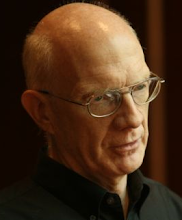
Mikael Colville-Andersen (that's him at right) is a film-maker and the blog author over at Copenhagenize and Copenhagen Cycle Chic. I heard him speak at the Washington DC Planning Commission last Wednesday night. Mikael is a good public speaker and a charming and funny guy, and he is promoting a provocative idea about urban cycling and cycling policy:

We could have all the benefits of Copenhagen cycling if we just, you know, dressed a little nicer on our bikes, if we just marketed bicycling as an activity by, um, looking more like a fashion plate.

Mikael cites a lot of statistics (if, for example, you go over to Copenhagenize, you can see a running total of bicycle miles ridden in Copenhagen up to the moment) and makes a number of frankly good points about the Copenhagen environment. He talks about all the bike infrastructure that's being implemented in Denmark, and he spends no small amount of time addressing the fact that cycling is so much a part of the Danish lifestyle that people who do urban cycling in Copenhagen don't think of themselves as "cyclists". To what does Mikael attribute this great example for the rest of the world? To the fact that the Danish cyclists dress well, with a sense of style, (and that the men wear suits). Mikael asserts that bicycling's lack of status (outside of Copenhagen and -maybe- Amsterdam) is due to the fact that we just don't dress well enough.

Mikael, excuse me for saying so, but I think you have your cause and effect either reversed or at best very muddled. Your fashion premise is a fiction. An amusing fiction, and one that we might all like to imagine ourselves in the midst of, but a fiction nonetheless.

I've been pretty tough on Mikael so far this post, (and I beat up on him a little in a previous post) but I will certainly concede that in his talk he does make some interesting and (mostly) valid points about the "values inversion" of the way that cars and automobiles are marketed:
  • Which is truly more "liberating", an auto or a bicycle?
  • Which is truly more dangerous, an auto or a bicycle?
  • Which is truly sexier, driving a car or riding a bike?
  • Should automobiles have warning labels like cigarettes?
and he does a nice historical exposition of bicycle posters, to show how bicycles and bicycling (as a tourist activity) have been marketed over the 20th century. These are valid, and I appreciate all this. And Mikael's "cycle chic" (thinly disguised girl-watching, but hey, I like this as much as the next guy) is supported in this article in Sci-Am about the incidence of female cyclists.

But the promulgation of "cycle chic" is just wrong as primary policy. Why do I say this? Two reasons. One, it's an effect, not a cause. And Two, because there are bicycling advocacy groups who will buy into it because it's easy. "All we have to do is increase our marketing budget and find some good-looking models, and our urban cycling problems will diminish!" Excuse me, but this is reductionist malarkey.

Over the past couple of years, I've spent enough time in Europe, in Belgium, France, Germany, Switzerland, and Sweden, to see the truth about why urban cycling in these places is different from the US. The truth of it is, what make cycling work in Copenhagen (and Amsterdam, Basel, Berlin, Brussels, Stockholm and elsewhere) is the combination of two components:
  1. Motorists' near-universal respect for bicyclists*; and
  2. Bicyclists' near-universal respect for traffic laws.
These two complementary components, while not impossible to enable in the US, are, nonetheless, longer-term and messier than a simple marketing campaign. Making these two things happen in the US will involve "the three E's":
  • bicycle safety education (best if done in public schools from an early age);
  • enactment of laws that protect bicyclists in a reasonable way; and
  • consistent and fair enforcement of those laws.
Denmark has all these things, and that is why Copenhagen residents use bikes casually and don't need to think of themselves as cyclists. (Some of the readers of this blog have already commented on the Danes' observance of traffic laws.) And this has created the secure environment that allows them to 'dress up' when it suits them. Not the other way around.

Postscript: Am I guilty of taking Mikael too seriously when he is intending to be 100% ironic? Hm. It is a possibility. But if Mikael really wants to get the substantive good news out about Danish cycling, there is certainly a lot of it that he's bypassing. Consider this excellent report (PDF) from the English reports pages of the Danish Road Directorate. (It's from the year 2000, but is the most recent paper on this topic.) In a (partial) defense of Mikael's "marketing" position, there is this quote:
It is important to link soft policies (campaigns, instruction etc) with hard policies (infrastructure, taxation etc). The combination of hard and soft policies is necessary in order to achieve a big change in travel behaviour, both regarding transport mode choice and road safety.
Notice that the quote does mention "campaigns" but in the same breath talks about education as well as "hard policies". In fact, the report is such a good report and so well researched and balanced, and give such a good picture of the real policies that need implementing that it somewhat reinforces my picture of Mikael as being reductionist. And mind you, the source of this document is the Danish highway department. Consider how different the US would be if we had our highway departments actively researching and promoting cycling! As just one example, consider the chart below and the story it tells:
But hey, all of this doesn't mean I'm not a curmudgeon :)

*There are exceptions to this, especially in the UK which for some reason tracks the US more closely.

Friday, September 25, 2009

Euro-envy in Basel and Berlin

I was in Europe on business this past week, Sunday through Friday, and spent my time in Basel and Berlin, which are both serious cycling cities. There were crowds of cyclists out, as the weather was mild. Pictures are worth thousands of words, and I'm suffering from mild jet-lag, so I'll just post some pictures and make a few comments. I describe this kind of post as "Euro-envy".

I know I've got a worldwide readership, and those of you who live in "real" cycling cities in Europe and elsewhere may well find this to be just boring tourist shots (and not great photography at that,) and for this I apologize in advance (although there may be one or two pieces of hardware below that are interesting). But this is mainly for those of us in America for whom bicycle culture is still on the outside looking in.

Arrived in Zurich on Sunday AM and took the train to Basel, where I had a day of meetings on Monday. Basel is a beautiful city situated on a bend in the Rhine, nestled in that corner of Switzerland that is right at both the French and German borders. Basel is a quite hilly place, with its share of rough cobblestone paving, and although they have bike-rental right at the Bahnhof, the profusion of streetcar tracks and the difficult navigation of the city's medieval planning kept me at pedestrian status. There is some bike infrastructure in Basel, but really it's just the social contract—well-educated motorists who are aware of the cyclists—that makes things work.

My first image tells quite a story by itself. Family of five. Mom hauling a trailer with kid #3, kids #1 and #2 on their own bikes, with Dad sheperding them. Mind you, this is the heart of Old Basel, at one end of the Mittler Brücke ("Middle Bridge") that crosses the Rhine. Here about 5 streets come together, as well as a couple (at least) of tram lines. True enough, it's a Sunday and a beautiful one at that, but ask yourself: Where in the US could this happen? Nowhere. Pick cities 1, 2, and 3 from League of American Cyclists best cities (I think they're Portland, Davis, and Boulder.) Would you see kiddo #2 on his own bike out there? I'm thinking not.

There were many families out, but this was the largest group that I saw. Lots of couples, with Mom having the child-seat or trailer setup and Dad getting to ride solo. Kind of unfair to the moms, always having to be the ones who lug the kids, but such is life.

Monday was all in meetings inside (it was a business trip, after all) and early, early Tuesday AM I caught the EasyJet to Berlin. (I must admit that knowing what I know about the carbon footprint of flying, and having the availability of trains, I was very tempted to try and build my itinerary around nothing but trains as a mode of transportation while in Europe, but it would have added probably two days to my stay to do so, and so was hard to justify to our company accountants.) Anyway, since I didn't have my next day-long meeting until Wednesday, I had an entire day to hoof it around Berlin with my cell-phone camera at the ready.

Berlin, Brunnenstraße north of Rosenthalerplatz: saw this nifty cargo bike with outrigger "rolling kickstand". This is a Biria-make postman's bike. Just look at the beautiful sweep of that split top tube, coming up to support the rear rack! A picture of the bike in action (being piloted by a familiar figure) with the kickstand up is here. Biria also sells bikes in the US, but not, unfortunately, this lovely model.

Rosenthalerstraße: the sleek iconic quality of this bike struck me. This is a classic Euro single speed. Fixies, even in Berlin, which is a very flat, infrastructure-rich, cyclist-friendly city, have not caught on here. Of the thousands of bikes I saw in use, I saw only one fixie, and it was parked. So think of this bike as "your Fixie's grandmother". Unlike what we think of as "fixies" these standard bikes are everywhere.

Rosenthalerstraße, heading south towards Aleksanderplatz (the omnipresent "Full-screenFernsehturm" TV tower in the distance): typical group of cyclists. Two of the seven cyclists in this picture have helmets. I would say that is about a normal ratio for Berlin. The Basel ratio is slightly higher.

Hackescher Markt: Nifty all-weather pedicab. These were all over. Several different companies running them.
F
Unter den Linden ("Under the linden trees", the broad tree-lined boulevard heading west to the Brandenberg Gate): The two shots, above and below, are the same intersection a few seconds apart as the light turned from red to green. The knot of cyclists are taking up the entire lane and spread out according to their different speeds. This is just Not A Problem in European cities. Sigh.

Charité Medical School, north central Berlin: I thought these little hedged and gated bike-parking yards were very nice. Secure and sightly. They are on the east side of the Max-Planck-Institut für Infektionsbiologie and can be clearly seen on Google Maps' satellite view.

Hannoversche Straße, near the medical school: This is a fairly unusual classic German motorcycle, an AWD. I'm no motorcycle fanatic, and certainly no expert, but I was struck by the aesthetics of this one. Look at that sleek crankcase and shaft drive. What a beauty!

Hauptbahnhof on Invalidenstraße: Right outside the main train station is a group of Deutsch Bahn "CallBikes". It is the German Railway-sponsored approach to city bikes, and it's quite different from Vélib or the others, as it has no fixed stations.

For the CallBikes system, you need a cellphone and an available CallBike (they are scattered everywhere). If the lock on the bike flashes green, it is available for rent. You call the phone number printed on the CallBikes to be texted the four-digit code which enables you to open the bike lock. When you're at your destination, you lock the CallBike to a stationary object anywhere inside the core city area. When you close the lock, a four-digit receipt code appears on the bike's display. Call the number printed on the bike, text the receipt code and the location of the bike and you're done. It will be interesting to see how this system works over time. I did see some people riding them, but I saw a lot more just sitting about.

(Sorry about the blurry shot—my group was walking fast to get to a meeting, and this was taken on the run).

Elisabethenstrasse, back in Basel: The Swiss Flyer is an E-bike produced by the Swiss firm Biketec AG, who have been at the E-bike game for a while. This is a small-wheel (20") version -- they have a lot of 26" styles and even an E-tandem! Most E-bikes, I think, use hub-motors, but this one appears to have a motor integrated with the front chainwheel (and concealed by the chain-guard.) One of my hosts in Basel is shopping for an E-bike. I think sales of these things are just exploding. This shot is a night shot of a window display, so it's a little blurry.

Intersection of Stänziergasse and Birsig-Parkplatz in old central Basel: Another night shot. This is a broad intersection of streets with lots of sidewalk-cafe action going on on a Thursday night in a pretty popular section of town, and the twentysomethings are getting around on.. bikes, of course. Lots and lots of them. (These bike parking areas are also visible on Google satellite view.) The near corner and the far diagonal corner of this intersection are packed with bikes. Most of them are locked with a short, heavy cable lock, which appears to be the security system of choice, much more popular than the U-lock seen more here in the US.

To an American, the most remarkable thing about cycling in urban Europe is it's not remarkable at all.

Saturday, September 12, 2009

Hazards 2: Interchanges

I was having a Saturday-morning kaffeeklatsch conversation with some ex-pats from overseas (there are a bunch of them who live out in Maryland suburbia, who work with NASA, in the diplomatic corps, and for agencies, well, let's just say they don't talk about their work very much.) One of them recognized me as a regular cyclist, because he'd seen me often on our neighborhood streets (I was so pleased), and so I gently (honest!) steered the conversation towards cycle-commuting. One of the guys was from Holland, and of course he liked to cycle "back home", but he said the hills in Maryland were too much for him. Another of the guys (an antenna designer for NASA) said that at one time he lived just 9 miles from his work, and (so he said) he would have liked to bike but there was a big highway in the way and he couldn't figure out how to get across it.

I knew the highway he was referring to, and I cross it regularly. There is an overpass about every mile along its length, but the overpasses are secondary roads, legal to cycle on, but certainly intimidating for the inexperienced. The overpasses can be particularly intimidating, and I thought it might be interesting to throw out the method I use to cross them. (Here's a link to the excellent "Infrastructurist" blog that the image at right comes from.)

Let me say right up front that this is vehicular cycling, and I've come to the realization that it's just not for everyone. I think that VC requires a commitment (and, often as not, a little bit of militancy in that commitment) to the concept that bicycles-have-full-vehicular-rights. It also requires concentration, some athletic ability, and some developed cycling skills. With all these ingredients available, VC is not dangerous, but as I say, it's not for everyone. In the America of today, though, it is the way to become carless if you don't want to wait for the powers-that-be to develop infrastructure. (This is not to take anything away from the Urban Repair Squad.)

The skills required for this apparently obvious maneuver are three:
  • The ability to ride up a gentle incline (as are most interchanges) and maintain a speed, say, in excess of 10 mph;
  • The ability to "ride a line" in traffic, to ride right on a highway stripe and not swerve even when cars bypass at speed;
  • The ability to look back in both directions without leaving your line of travel;
I say "apparently obvious" because in essence all the cyclist does when crossing an interchange is go in a straight line. I've seen experienced cyclists (although not experienced in the vehicular sense) mess this one up, always trying to be next to the curb or shoulder, and crossing too many vehicular lanes in the process. The State of Maryland "rules of the road" booklet is a little ambiguous on the practice of bicycles and turning lanes. It says:
A bicycle should be operated as close to the right side of the road as practical and safe. However, cyclists are expected to use turn lanes.
It doesn't say, however, in this context how bicyclists are supposed to use them. (I've contacted MD-DOT and will post their clarifications here when and if I receive same.)

So, anyway. Back to the topic at hand, which is the interchange. A most common interchange that one would encounter here in Maryland is the classic "cloverleaf" which I've illustrated in an adjacent image.

I've analyzed the crossing of this interchange and find that it contains seven (!) zones that have to be traversed, and each zone requires a separate response. Each zone is unique, but some are similar to others. Take a look at the illustration.

Our intrepid vehicular cyclist is crossing from bottom to top. The primary road (say an expressway) is the horizontal main road. The secondary road (typically a road with a speed limit of less than 50 mph) is the one our cyclist is on. We'll assume the secondary road has a decent rideable shoulder. (This is not necessary, but most secondary roads of this character do in fact have this, so it's a reasonable assumption.)

So, let's descibe the seven steps of getting across a highway interchange. They are:
  1. In this zone the cyclist is riding the shoulder, looking over his left for oncoming traffic that may not see him;
  2. In this zone, the cyclist is "riding the line", on high alert for motorists overtaking, not being aware of him, and crossing in front of him from left to right;
  3. In this zone, the cyclist gets a brief mental rest (on the shoulder again) and looks to his right to assess oncoming traffic from the loop;
  4. In this zone, the cyclist is again "riding the line", on high alert particularly for motorists coming off the primary road overtaking, not being aware of him, and crossing in front of him from right to left. Since there are also cars on the left, this is probably the most intimidating section;
  5. Another brief rest. This is similar to zone 3, as the cyclist should be looking right and anticipating;
  6. In zone 6, the cyclist will either "ride the line" if there is bypassing traffic on the right, or, if the road right-behind is plenty clear, make an efficient crossing to the shoulder. (I say efficient because for obvious reasons this lane is no place to dally);
  7. The last zone, the cyclist has regained the shoulder and is on his way;
So. There you have it, a quite complicated way to get from point A to point B in a straight line. Most experienced vehicular cyclists might well regard this post as both obvious and trivial. But I put it up to make explicit what the requirements are for VC. Mind you, I think the rewards are commensurate, to be sure. Freedom is a wonderful thing.

Saturday, August 15, 2009

De Pigerne Promenade...

..which is Danish for "The Girls Promenade". Which is kind of how I think of the blog Copenhagen Cycle Chic. I have to admit, it's kind of an envy thing. Let me explain.

Firstly, here's the brief on CCC:

Copenhagen Cycle Chic began its bloglife back in June 2007 when journalist, film director and photographer Mikael Colville-Andersen decided to put a growing number of photos about Copenhagen's bicycle culture into one place on the internet.

A series of social documentary photos about Copenhagen started to include a number of shots of life in the World's Cycling Capital, including fashionable Copenhageners on their bicycles. The feedback about these photos was positive and there was clearly a growing interest abroad in seeing how the bicycle was an integral part of life in the Danish capital. Specifically about how Copenhageners have demystified the bicycle and use it without any form of bicycle 'gear'. Just as the bicycle was meant to be ridden when invented.
I love that statement about "how Copenhagers have demystified the bicycle and use it without any form of bicycle 'gear'". Really? Do the good bicycling citizens of Copenhagen not have to carry locks, has bicycle theft become passé in Copenhagen? Hm. I don't think so, although supposedly "convenience theft" has decreased since Copenhagen introduced their City Bike system. Do the Danes not have to use lights after dark? I can't imagine so. And I know for a fact (by looking at some of nice photography on the site) that bike baskets and panniers are widely used. So I suspect the "bicycle gear" that Mikael Colville-Andersen is referring to is bicycle clothes. Which raises the question:

Why are functional bicycling clothes so reviled, especially in Copenhagen?

I mean, look at the Copenhagen Cycling Chic Manifesto. (Here's the desktop version and here is the blog post.) While certainly delivered with tongue firmly planted in cheek, I mean, come on.

I wear:
  • bike shorts (simple black ones, not team-livery) because they don't chafe when I'm cycling at 15-20 mph;
  • a bright fluorescent jersey to be visible in all weather conditions;
  • cycling shoes for more efficient power;
  • gloves to keep my hands from getting lacerated in a spill; and
  • a helmet for safety.
I admit this may be "geeky" (however that's defined) but this is practical cycling, and it is, after all, the name of this blog. The Copenhageners (Copenhagenites?) sniff at this, because they know they have it good, and they want to flaunt it.

Why do I say they "have it good"? I've been giving this some thought, and I've come to the conclusion that this is a "hierarchy of needs" issue. Most readers will be familiar with Abraham Maslow's "Hierarchy of Needs" often expressed as a graphic pyramid from his 1943 paper, "A Theory of Human Motivation". The original hierarchy was expressed as the following levels of need:
  • Physiological (meeting biological needs);
  • Safety (security of body, resources, property);
  • Love/Belonging (friendship, family, intimacy);
  • Esteem (self-esteem, confidence, respect);
  • Self-Actualization (morality, creativity, etc.);
Now, let's think about the environment of practical cycling. There's a hierarchy of needs here, also, if you think about it:
  • Law (I must have the legal right to be on the road!);
  • Safety (Can I make it to my destination without mishap?);
  • Living Density (How far do I have to ride to work?);
  • Physical Ability (How much strength do I need to do it?);
  • Style (Can I look good or be cool doing it?);
The beauty of Copenhagen is that the first three levels of the pyramid are taken care of. Cyclists are legally supported in Denmark, and are numerous enough that they are well respected on the road. Copenhagen, like most European capitals, is very densely settled (and flat to boot) so that rides are short and it doesn't require significant physical stamina to handle the ride. Which gives the Danes the luxury of being able to focus on Style. Good for them, I say. But, as reported earlier, I'm jealous.

Keep up the promenade, girls. And, by all means, keep looking good. But please, try to not rub our noses in it quite so hard!

Wednesday, June 24, 2009

Times Square

I asked my younger daughter (who lives in New York City) what she thought about the new Times Square makeover (where Broadway has been blocked from automobile traffic in a couple of places) and she seemed dismissive. (She might have called it a "gimmick".) I think that she, as an adoptive New Yorker, wants to keep away from touristy areas, and Times Square certainly qualifies.

It's weird to think about cheap folding lawn chairs in the left-over spaces where Broadway used to cross 7th Avenue (which remains open, by the way.) Supposedly, the city takes up the chairs every night and redistributes them every morning. Is this any way to run a national urban landmark?

But there's something important about the New Times Square makeover by the Planning Department of New York City. If nothing else, it's the first U.S. project (ad hoc though it be) in my memory whose momentum is decidedly anti-car. Nicholai Ouroussoff reviews the "design" in this article. Nick O (as I will dare to call him) is right on the money about the unplanned nature of the action (as he says, "this is not the Piazza San Marco in Venice or even Trafalgar Square", but I think it is so important to expose people (even if they are unwitting tourists!) to the idea that the U.S. can have a "public realm" that isn't driven (sorry!) by traffic engineering.

Over at the very interesting blog, World Streets (newly on my blogroll), there is a very interesting article (which promises to be a series) by Paul Barter, a professor in public policy at the National University of Singapore, about "The Battle for Street Space" that is really worth a read (as is much of the other stuff over there.) I see many people from all over the world on that blog talking about 30 kph (yes, kph) speed limits everywhere except on highways. My first reaction is to lecture these people about how this will never fly in the U.S.; the auto is forever king here. But maybe not -- Times Square is a very interesting precedent. It will be fascinating to see where it goes.

Sunday, May 10, 2009

IKEA and bikes

This past weekend, I passed the architect's equivalent of the "busman's holiday", which is, I spent two days in New York City assembling IKEA furniture for my younger daughter who is moving into her own apartment in NYC to take her first job. (Big milestones, you will I hope agree, and particularly poignant on Mothers' Day weekend.)

I am continually impressed with IKEA's value-engineering of their product. Their simple idea is to deliver good design at the least cost. In this case, "good design" means not only visual appeal but also sturdiness without excess weight or material. These are big challenges also for bicycle design, and IKEA stands out as the world-wide champion of achieving this.

Their approach to value-engineering is relentless, and if you assemble (as I did) eight pieces of furniture and observe their VE technique, it's quite remarkable. In eight pieces of furniture, there was only one mistake in execution (a wrong-handed drawer glide was supplied.) The newer pieces used a composite, rather than all-metal, cam-lock mechanism that was lighter, cheaper (no doubt) and held just as tightly as the old all-metal ones. Perhaps most remarkably, in not one of the pieces I assembled (and I did everything from bookcase to desk to dining table to futon) was there either a hardware piece missing or extra.

It's extremely tempting to ask the question, "If IKEA made a bike, what would it be like?" I'm guessing the specs would be something like this:
  • Two-piece reinforced resin 6 spoke wheels;
  • Sealed press-in cartridge bearings everywhere;
  • One wrench required to assemble the whole thing (probably 6mm);
  • Internally geared 3 speed rear hub assembly, in-hub drum brakes front and rear;
  • Single frame size (also reinforced resin or possibly TIG-welded aluminum);
  • Size adjustments with extra-long, cuttable seatpost;
  • Some innovate approach to a fork (maybe a motorcycle style double-post fork with resin crossbars) to eliminate the expensive headset arrangement;
  • Single-chainwheel crank with either belt drive or lifetime lube chain;
  • Standard saddle and pedal attachments to allow for customization / replacement;
  • One-piece (i.e. non-demountable) bars, grips and brake lever assembly.
All flat-packed and user-assembled, of course. The price would I think be in about the $300 range. It's doable with the current technology (and with the VE technology that IKEA has already assembled.)

Then they should sponsor a team in the Tour. (I'm surprised they don't already -- they must have more money than God.)

Sunday, March 1, 2009

Progress / Condescension

So, first a progress report: I logged 180+ miles in February, which isn't so bad since I "lost" more than a week visiting Germany and Switzerland. (Not really lost, of course, although I came to dread hitting the hotel gym to ride a stationary bike -- bleah.) The good side was of course seeing how the "other half lives".

The hastily-snapped cellphone picture at right is a bike shelter we saw from the
train between Munich and Basel. Interesting bike racks. But also consider this is the first week in February. Many citizens, even in the elevated parts of semi-Alpine Western Europe, have integrated their bikes in their daily lifestyle. Bike, train, no car. At least not on a daily basis. It's definitely true that distances are smaller compared to the sprawling US, but I have to say, it is so refreshing to see this (and not just because of the brisk air.)

While we were in Basel, we had anything but nice weather (lots of rain and wind) but the practical cyclists were out, getting around, everywhere, at all hours of the day. On the coldest, windiest day, I saw a woman riding a bakfiets with her two little kids bundled up like two stuffed toys. Even I, a daily cyclist, saluted her unconsciously, but frankly, she didn't seem fazed.

Which brings me back to my experience since returning. On a couple of occasions, I've sort of 'snapped' at people who have commented on my cycling. Just after returning, when attending a yoga class, I was locking up my bike at the yoga center when an older woman (who was going to the same class as I) turned to me and said, "Ah, it's a sure sign of spring when the cyclists come out." I responded with as much abruptness as I could muster, "Oh, I cycle year 'round." (It just came out, really.) And just last week, I was biking to meet my wife at a doctor's office so I could put my bike in the back of the car and drive her home, a nurse at the office said, "that's so cute that you ride your bike everywhere," and I snapped back, "I'm the future."

I felt condescended to by these people. My dictionary defines "condescend" as "to show feelings of superiority". Certainly people driving cars have physical superiority. A very small car is still very large, heavy, and hot up against a bike. But to be treated in the diminutive makes me feel like these people are also claiming moral superiority, and I can't accept that. These people are ignorant. They don't understand the horrifying waste that they produce with their lifestyle, they haven't the imagination to see it. Since I've comprehended it, I can't just make it go away. So I do what I can. And I think that is worthy of respect, not condescension, not impatience.

I won't be holding my breath waiting for it, though.

Thursday, November 27, 2008

Thanksgiving 2008

I'm very thankful to be a cycle-commuter. It greatly increases my health (mental as well as physical), it saves me money, and it does its part to save the planet. It has such a salutary effect on my lifestyle that I'm sure I would bore to tears anyone who asked me why I cycle and was willing to stand around and hear the answer.

One of the questions I therefore ask myself (repeatedly) is, "Since cycling provides so many benefits, why don't more people cycle? What would it take to get more people on the road?" Certainly one (oft repeated here) obstacle is the irrational fear of traffic. (Irrational, that is, for people with traffic cycling skills.) Once a cyclist has a high skill level, it's no problem to cycle in American traffic.

However, it's just not rational to expect a large number of people to somehow magically develop these skills. So in the absence of [insert magical event here], how do we change the environment (and I use the word "environment" in the broadest sense) to effect this desirable change?

I'm not the only person who has been asking this. Fortunately. (If I were, very little would have gotten done.) Dr. John Pucher is a professor in the Bloustein School of Planning and Public Policy at Rutgers University, and he has studied bicycle use in all its variants across the world. Pucher's bio page is here , so I won't repeat it. Suffice it to say that this guy is doing important work in the areas of public policy and public health. He (along with a Rutgers PhD candidate, Ralph Buehler) have written a well researched white paper (PDF) and an excellent presentation (in both video and slideshow form) on the topic "Cycling for Everyone" which studies cycle use worldwide, and which focuses on the ways governments can encourage cycling utilization by policy in the following areas:
  • Better facilities and traffic engineering
  • Integration of biking with public transport
  • Traffic calming of resiential neighborhoods
  • Mixed-use zoning and improved urban design
  • Traffic education
  • Traffic regulations and enforcement
He's given this presentation in various forms in fora in New York City (4/2007), Louisville, KY (4/2007), Vancouver, BC (5/2008) and at the League of American Bicyclists National Bike Summit in Washington, DC (3/2007). So this is no big secret by any means, but it's definitely information that bears repeating, and passing on.

The presentation is in some ways a laundry list, and I think that there are some implementations in Europe that will have difficulty finding acceptance in the US (30-kph speed limit zones for example) but there are many that are already "mainstream" practices in the US, e.g. traffice calming and bike carriers on public transit. The really good news here is, all the policy research has been done. Now it's only a matter of using that research to bludgeon convince our legislators that this stuff is important for our health, our well-being, and our energy policy also. I think the League has done good work in this area, and that's why I'm a member of it.

So, hats off to you, John Pucher. Here's wishing you success in getting your policies put in place. And, as long as we're being thankful, thank you for the good work you've done and continue to do.

Wednesday, November 5, 2008

Stockholm Cyclist Holiday...

..well, it was really a business trip, but I was able to tack on a day to do an extensive tour of the city by bike. As I said in an earlier post, I'd never been in Sweden before. I found it very English-friendly. (This is good thing, as my Nordic is pretty non-existent. One of the weird things about visiting Sweden is that "Hello" in Nordic is "He!" pronounced "hey". It's tempting to just say "hey" right back, kind of comfortable and informal, until you realize that you're sending the wrong signal about which language you prefer.)

Stockholm has a lot of practical cyclists. It would not be hard to believe that (at least in the warm months) 20 to 25 8 to 10 percent of city-dwellers commute to work, or do at least some practical transportation on bikes. The city has an extensive network of bike lanes, and the sensible Swedes wear helmets in far greater proportion than I've seen elsewhere in Europe. I'd guess 50% of the urban riders I saw wore helmets, which may not sound like a lot, until you see Paris where the percentage is in the low (and I mean low) single digits.

Stockholm has a public bike-sharing system called "Stockholm City Bikes". It has been put together by Clear Channel advertising, who I think also did the Washington DC "SmartBike" system. The systems look pretty much identical: the bikes (3 speed w/ coaster brakes on the rear) are the same (see my post on SmartBike here), and the rental system is very similar, with a 3-hour usage limit. SCB is more tourist oriented, though, with a 3-day pass available (for between $15 and $20) at the central railway station.

I got a better deal than SCB, though. I got a free bike for two days from my hotel (a very nice central hotel called the Scandic Anglais). Evidently this is not unusual. The larger hotels keep a collection of bikes available for patron use, and you just check them out and a deposit is put on your hotel tab until you return them. Simple and convenient. The bikes are nothing special: one-speed "ordinaries" with rear coaster brake (coaster brakes suck, by the way) and drum brake on front, rack, mudguards, and lights. Pretty basic stuff, and not very different from what a lot of locals use on their own. Just guessing, I would say that about 50% of the locals were on "ordinaries" while the other half were on more high-tech modern bikes. I saw very few people on the SCBs. It was late September, and past the tourist "high season", so maybe that was it -- the SCBs were mainly for tourists.

The SCB website is here, but it's in the off-season now. Bikes are available only for seven months of the year, 3/31 to 10/31. I guess winters are pretty tough in Stockholm. One of my acquaintances there said he had a co-worker who put on studded tires and rode year-round, but he was considered extremely hard-core by his colleagues.

So, to document the holiday and encourage other tourist-cyclists in Stockholm, I've mapped my city tour on Google Maps below. My first day tour (8.5 miles, Friday afternoon) is in red, and my longer Saturday tour (19.5 miles) is in purple:


View Larger Map

..and, even more fun, have an annotated collection of "travelogue" photos on flickr here. You can click on the map link on each photo page to see where it was taken in Stockholm. I hope you enjoy seeing Sweden's capital by bike!